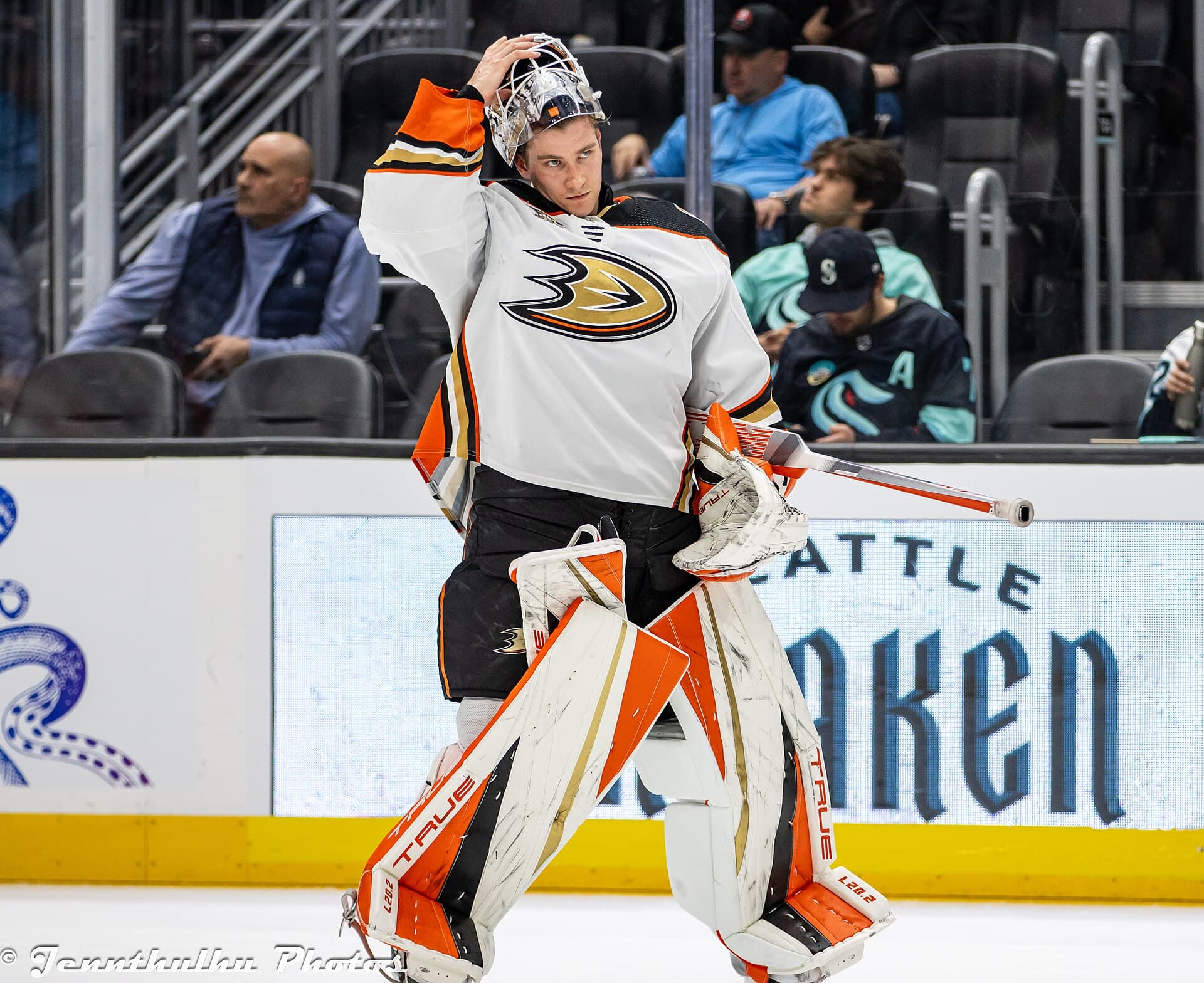
The hockey world didn't need a feature-length profile to understand what happened to Lukáš Dostál on October 28, 2026. It needed a box score. In Anaheim's meeting with Vancouver, NHL.com's game coverage told the story in three blunt strokes: Lekkerimäki scored against Dostál. Oleksiak scored against Dostál. Boeser scored against Dostál. Three separate headlines, one goaltender, one night.
That's the difference between a narrative and a news cycle. The story behind these headlines isn't some buried controversy or a slow-burning slump - it's the raw, repetitive reality of a goalie being beaten three times in a single game, each goal catalogued as its own discrete event. For a netminder, that's the loneliest kind of press: your name appears only as the object of someone else's scoring line.
The Night the Headlines Turned: Dostál vs. Vancouver
Notice what's absent. No headline reads "Dostál steals one" or even "Dostál pulled." The coverage is ruthlessly neutral - a scoring log, not a verdict. That matters. Three goals against isn't a catastrophe in the NHL; it's Tuesday. But the framing puts Dostál in the position every goaltender dreads: the backdrop for three opposing celebrations, with no counter-narrative in the same feed.
That's precisely where Lukáš Dostál: the story behind the headlines and who it affects most gets lost in translation. The headlines tell you what happened - three goals, three scorers - but they tell you nothing about how or why. Was it a defensive breakdown? A screen? A perfectly placed shot? The neutral wire-style copy doesn't say, and that silence is the real story. Fans scrolling the feed see only the result, never the context.
Goaltenders live and die by context that box scores erase. A 2-on-1 rush finished by Lekkerimäki, a point blast through traffic from Oleksiak, a Boeser snipe on a broken play - each could be anywhere from unforgivable to unsaveable, and the headlines treat all three identically. That flattening is what makes nights like this so brutal for a netminder's reputation. The same three goals could read as a collapse or a hard-luck evening, and the coverage won't tell you which.
The Ducks, and Dostál, know the difference. Everyone else just sees the score.
Who This Actually Affects Most
Headlines like these ripple far beyond one locker room, and the people most affected are rarely the ones named in them.
The Ducks' Defensive Structure
When a goalie shows up three times in the negative column of a game story, the first group to feel it is the six players in front of him. Anaheim's blue line will wear this publicly - missed assignments, odd-man rushes, screens - because the NHL's headline economy assigns goals to shooters and blame to netminders. The Ducks' coaching staff now has a concrete teaching reel: Lekkerimäki's finish, Oleksiak's strike, Boeser's tally, all isolated for review. No coach has to build a case from scratch; the league's own headline feed did the splicing.
But the ripple goes further. The defensive group's confidence is a fragile thing, and it's contagious. When a bad night gets catalogued in triplicate, the temptation is to over-correct - to chase the game, pinch when you should sag, freelance when the system asks for structure. Anaheim's challenge is to treat October 28 as data, not destiny, and to make sure the six players in front of Dostál internalize the same lesson.
Dostál's Own Crease Politics
Every rough outing shifts the internal math of a goaltending tandem. Dostál's grip on starts isn't decided by one night, but it is influenced by it - and everyone in the organization knows it. The real audience for these three headlines isn't fans; it's the coaching staff deciding who gets the next nod. In a league where crease certainty is currency, a single box score can tip a coin that's been in the air for weeks.