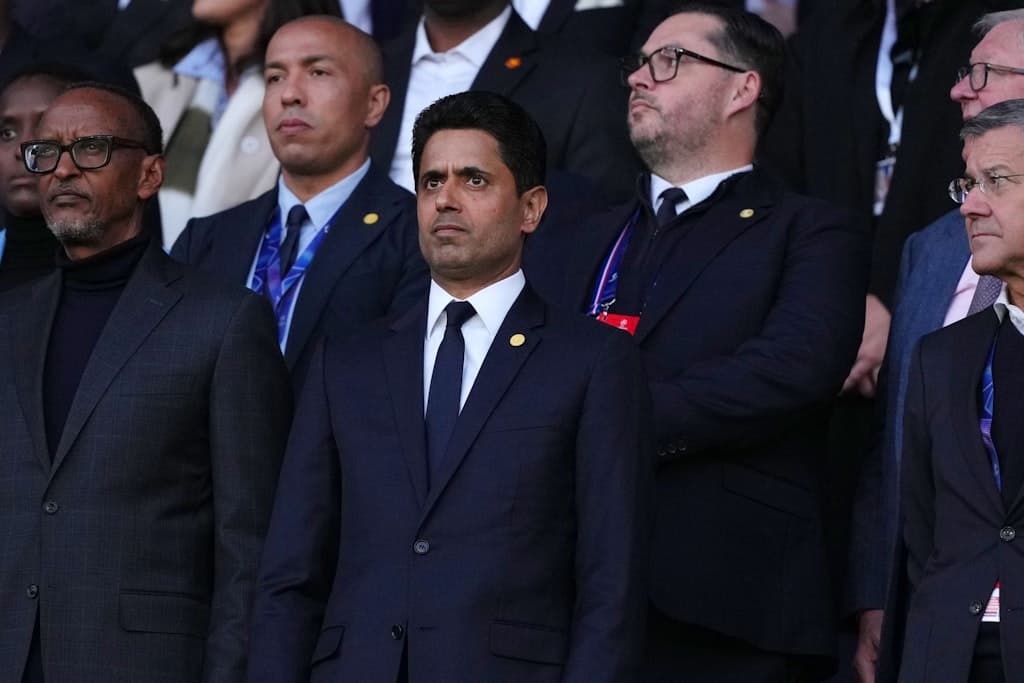
The whispers have turned into something louder. The race to dethrone Gianni Infantino is no longer confined to corridor chatter - it's becoming a genuine movement. Infantino cruised to a third term unopposed in March 2023, but the calculus has shifted dramatically since. With the 2027 election officially on the horizon, factions within football's global governing body are quietly loading their slingshots.
Infantino's aggressive expansion of competitions, financial dominance, and iron-fisted governance have created friction across confederations. No formal declarations have been made yet, but several powerful figures possess both the platform and the grievances to mount credible campaigns. These aren't fringe candidates. They're heavyweight administrators with confederation backing, institutional memory, and the political networks to actually challenge the status quo.
The pressure points are real - and bleeding. FIFA's revenue is projected to exceed $11 billion for the 2023-2026 cycle, yet players' unions and domestic leagues increasingly decry the congested match calendar. The expanded 48-team World Cup just wrapped across North America in July 2026, generating massive broadcast income. But it also stretched players to breaking point, with FIFPRO publicly warning of burnout crises.
Against this backdrop, potential challengers see an opening to frame Infantino as a consolidate-and-expand president whose priorities have drifted from football's grassroots. Any serious opponent will need 51 percent support from the 211 federations to win - an electoral mountain that requires coordinated continental coalitions.
📊 211 national associations hold FIFA voting rights - A challenger needs at least 106 votes to defeat Infantino, making continental bloc alignment absolutely non-negotiable.
The Likely Contenders Backed by Power Blocs
Sheikh Salman bin Ibrahim Al Khalifa (Bahrain)
No name circulates more frequently in football's power corridors than the AFC President. Sheikh Salman has led Asian football since 2013 and serves as a FIFA Vice President, giving him institutional access and credibility that lesser challengers lack. His geographic positioning matters enormously - Asia controls 47 of FIFA's 211 votes, the largest continental bloc. If he consolidates Asian support, he starts with roughly a quarter of the votes needed.
His allies also include many African and Arab federations who've grown weary of Infantino's perceived European-centric agenda. Sheikh Salman's campaign would likely pivot on governance reform, transparency, and fairer distribution of World Cup revenues to developing federations. His public silence on 2027 is strategic. He's learned from past challengers that premature declarations invite retaliation.
Jérôme Champagne (France)
The twice-defeated challenger remains the most candid about his ambitions. Champagne, a former FIFA Deputy Secretary-General, understands the labyrinthine mechanics of FIFA politics better than almost anyone alive. His 2015 and 2019 campaigns focused on term limits, financial transparency, and restoring FIFA's battered credibility - issues that have only grown more relevant.
While his electoral performances were underwhelming, Champagne has evolved from gadfly to serious spoiler. His persistent criticism of Infantino's governance style has aged well, particularly as external oversight concerns have continued to dog FIFA's leadership. Champagne's value in 2027 may not be winning outright, but forcing issues into public view and splitting votes in ways that reshape the final ballot.
David Dein (England)
The former Arsenal vice-chairman represents something entirely different: a football outsider backed by domestic European clubs. Dein has been floated repeatedly in UK media as a "unity candidate" who could bridge the chasm between club football and national associations. His appeal lies in his English Premier League pedigree and his longstanding advocacy for reforming the international match calendar.
European domestic leagues, led by La Liga president Javier Tebas, have been openly critical of FIFA's expansion plans - particularly the newly-expanded 32-team Club World Cup that debuted in June 2025. If Dein secures backing from Europe's top domestic competitions and influential English and German football figures, he could position himself as the candidate of the traditional club game - a direct rebuke to Infantino's World Cup-centric vision.
South American Confederation Leadership (CONMEBOL)
With the 2030 World Cup set to be hosted partially in South America (alongside Spain, Portugal, and Morocco), CONMEBOL holds significant leverage in negotiations. A South American challenger could inherently argue that Infantino's expanded formats have marginalized the traditional South American game - a region that has historically dominated World Cup success.