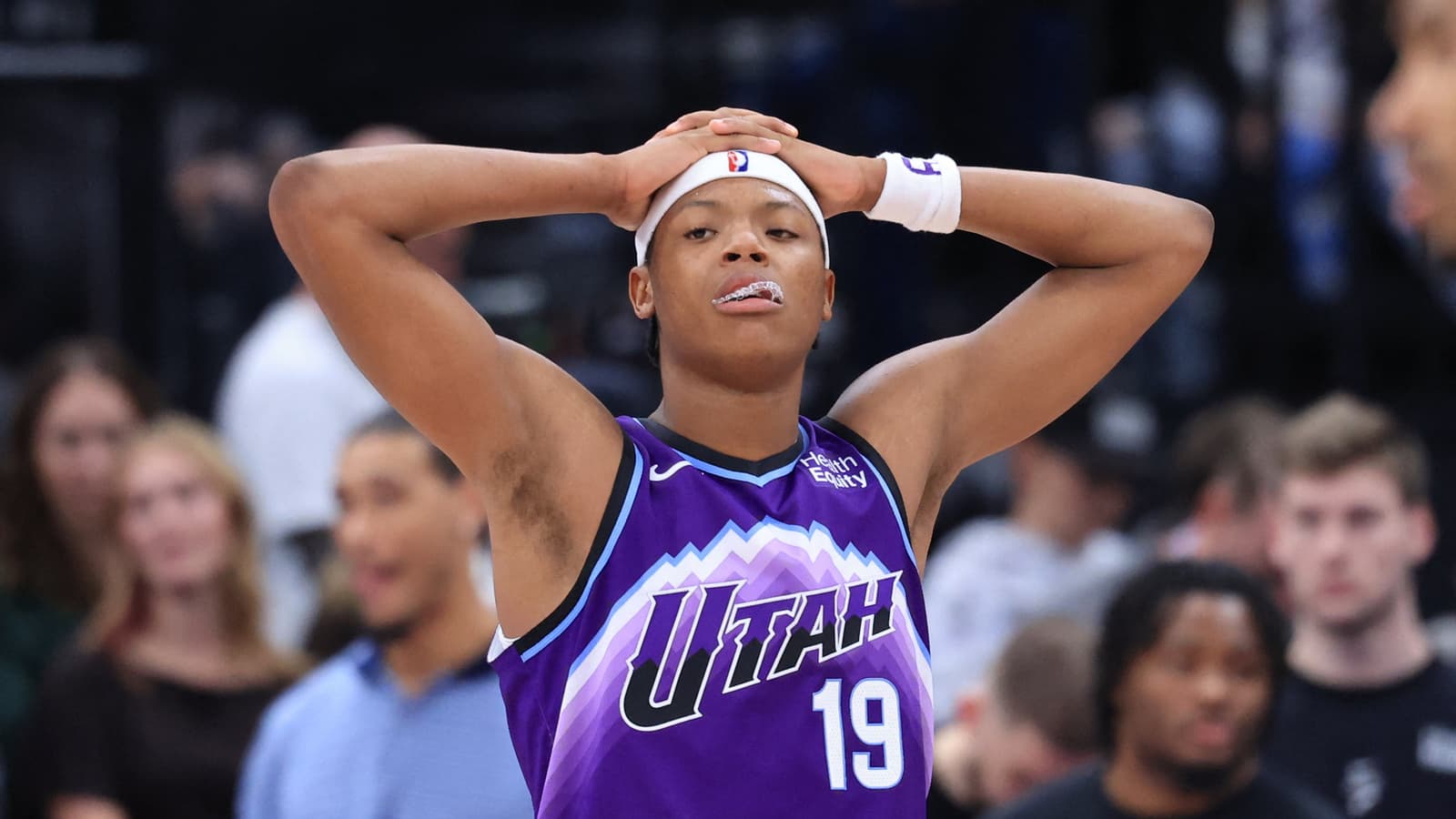
The NBA is a different animal than college hoops, and nobody understands that better right now than Utah Jazz rookie Ace Bailey. The talented wing has been navigating the brutal 82-game grind while learning from some of the best veterans in the league, and his insights reveal how quickly the former Rutgers star has matured on and off the court.
Bailey recently opened up about his transition to the pros, the role Utah's veteran leaders have played in his development, and his ongoing friendship with Spurs rookie Dylan Harper. In a season where rookie walls come fast and hard, Bailey's perspective offers fans a glimpse at what it really takes to survive the NBA's relentless pace.
The 2026-27 season has been a learning curve for Bailey, but the numbers show real progress. He's averaging 22.4 minutes per game and shooting 46.8% from the field, a steady climb that's caught the attention of Jazz faithful who were skeptical after Utah traded up to grab him. As of November 24, the Jazz sit at 9-11, and the rookie's growth will be key to a push toward the playoff conversation.
| Category | Value |
|---|---|
| Games Played | 20 |
| Points Per Game | 13.2 |
| Rebounds Per Game | 5.1 |
| Field Goal Percentage | 46.8% |
| Three-Point Percentage | 37.2% |
| Minutes Per Game | 22.4 |
NBA Pacing is a Whole Different Beast
College basketball is a sprint; the NBA is a marathon with jet lag and back-to-backs stacked like a house of cards. Bailey learned that lesson fast.
"The pace of the game is totally different," Bailey explained. "In college, you get days to recover. Here, you're playing 15 games in a month and traveling across the country. It's a mental grind as much as it's physical."
For NBA rookies, the data on in-season fatigue is well-documented. According to ESPN's NBA injury and workload reporting, first-year players often see statistical dips of 10-15% in efficiency during the middle stretch of the season, a phenomenon commonly known as the "rookie wall." Bailey's early consistency is a promising sign that he's managing the workload.
> 📊 22.4 minutes per game - Bailey's current playing time reflects Utah's deliberate approach to easing him into the rotation while keeping him fresh.
For Bailey, the key has been in his body-maintenance routine - hydration protocols, film study sessions at dawn, and a relentless focus on recovery.
Veteran Wisdom in Utah: Learning from the Best
Utah's locker room is packed with experienced voices, and Bailey credits his veteran teammates for helping him adapt to the NBA's mental and physical demands.
"It's not just the pace of the game; it's the pace of the season," Bailey said. "The vets in Utah have shown me how to handle the grind - how to be a professional, how to take care of your body, and how to stay locked in when you're exhausted."
The Jazz have long been known for their player development culture, and the franchise's investment in mentorship has paid dividends. According to official Jazz team coverage, Utah's coaching staff has emphasized a "next-man-up" mentality, with veterans taking rookies under their wing during film sessions, recovery days, and road trips.
Bailey has embraced that wisdom.
"When you're a rookie, you want to prove yourself every single possession," he said. "The vets have taught me to slow down, play within the system, and trust the process. That's been huge for my confidence."
> 📊 37.2% from three - Bailey's efficiency from beyond the arc is a testament to his disciplined shot selection and veteran influence.
The results speak for themselves - his shooting splits have been remarkably consistent for a first-year player, and Jazz fans are already dreaming of the ceiling.