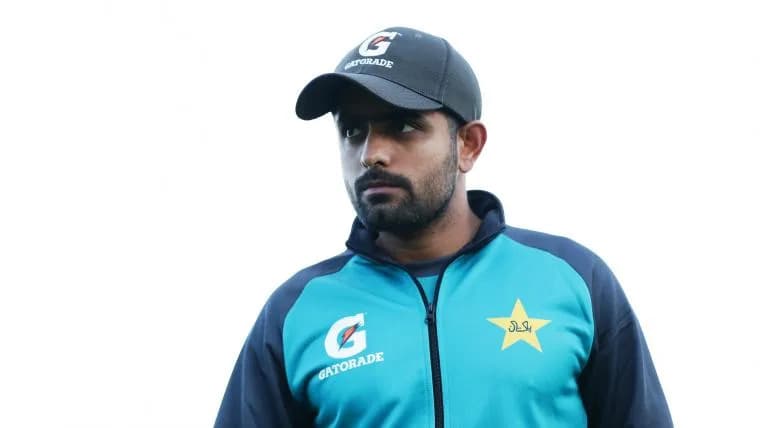
Get Sports Journals - July 29, 2026 - Karachi crackled with energy as Pakistan set out to chase 278 against West Indies in the third ODI. By night’s end, the dressing room sat in silence. A 90-run loss left Babar Azam visibly frustrated. In a raw post-match press conference, the captain didn’t sugarcoat it. He pinpointed exactly where things fell apart - summing it up bluntly: “Weren’t upto the mark.” Two culprits stood out: a middle-order collapse and sloppy fielding.
Here’s what went wrong, where the game slipped, and what Pakistan must fix before the next clash.
Babar Azam Lays It Bare - Two Reasons Why Pakistan Fell Short
Reason #1: “Middle-Order Collapse Under Pressure”
Fakhar Zaman and Imam-ul-Haq had given Pakistan a flying start - 65 runs in the first 10 overs. The innings looked comfortable. Then the spinners struck. Roston Chase and Gudakesh Motie squeezed the middle overs, and Pakistan lost 4 wickets for 38 runs between the 15th and 25th overs.
“We were in a good position, but our middle order couldn’t handle the pressure,” Babar admitted. “Losing three wickets in quick succession - myself and Rizwan included - shifted momentum completely. We weren’t upto the mark rotating strike against spin.”
Mohammad Rizwan’s dismissal (caught at deep mid-wicket off a loose sweep) and Saud Shakeel’s LBW playing back turned the tide. The required rate jumped from 5.8 to over 7.5. The tail had no answers. Pakistan folded for 188 in 42.3 overs.
Reason #2: “Fielding Let Us Down - Dropped Catches Cost Us 30-40 Runs”
Babar didn’t stop at batting. He called out the fielding unit for a performance that “is not our standard.” West Indies, 110/3 in the 25th over, looked vulnerable. Then Nicholas Pooran and Sherfane Rutherford stitched a 127-run partnership. But they got lifelines.
In the 28th over, Shaheen Shah Afridi dropped a straightforward chance at mid-off to dismiss Pooran on 44. Pooran went on to score 91. Two overs later, Shadab Khan spilled a sharp but catchable opportunity at point when Rutherford was on 29. Rutherford finished 82 not out.
“We gave them two extra chances and they made us pay. Those dropped catches cost us an extra 30-40 runs easily,” Babar said, shaking his head. “Our fielding has to be our strength, not a weakness.”
Read more: Pakistan’s fielding standards - a growing concern?
Where the Game Actually Slipped Away - The Turning Point
The Partnership That Broke Pakistan’s Back
One phase defined the match: the Pooran-Rutherford stand. After Shai Hope and Brandon King provided a steady start (74 runs off 97 balls), the pair accelerated ruthlessly. They milked Pakistan’s pacers through the middle overs, hitting boundaries at will against Haris Rauf and Mohammad Wasim Jr.
Babar’s tactical decisions also drew scrutiny. He persisted with part-time spin from Agha Salman for four overs, conceding 34 runs, and delayed bringing back Shaheen until the 38th over - by then the damage was done. The partnership added 127 in 16.3 overs at nearly 7.7 an over, pushing the total past 270.
Early Wickets Wasted in the Chase
Pakistan’s reply started brightly. Fakhar and Imam looked in control, scoring at over six an over, hitting 11 boundaries in the powerplay. Then came disaster: both openers dismissed within three balls of each other - Imam caught behind off Alzarri Joseph, Fakhar run out after a mix-up. Momentum flipped. The required rate crept up steadily, and the middle order couldn’t recover.
“We had the start we wanted, but we didn’t capitalise,” Babar reflected. “The run-out changed everything. After that, we were always chasing the game.”
Check out: Why Pakistan’s run-out problem is hurting more than ever
What Babar’s Honest Assessment Means for Pakistan’s Next Matches
Urgent Fixes Needed in the Batting Order
The series sits level at 1-1. The fourth ODI in Lahore is do-or-die. Rumblings grow about promoting a more aggressive option like Iftikhar Ahmed at No. 4, or even giving a debut to young Haseebullah Khan as a floater. Babar didn’t commit to changes, but the message was clear: “We have to look at the combination. Everyone knows we need more stability in the middle overs.”
If the top three (Fakhar, Imam, Babar) fail, who steps up? Right now, no one has. The team lacks a dependable finisher capable of rebuilding after early wickets.