Barcelona’s grand homecoming was supposed to feel like a tidal wave. Instead, it arrives one careful ripple at a time.
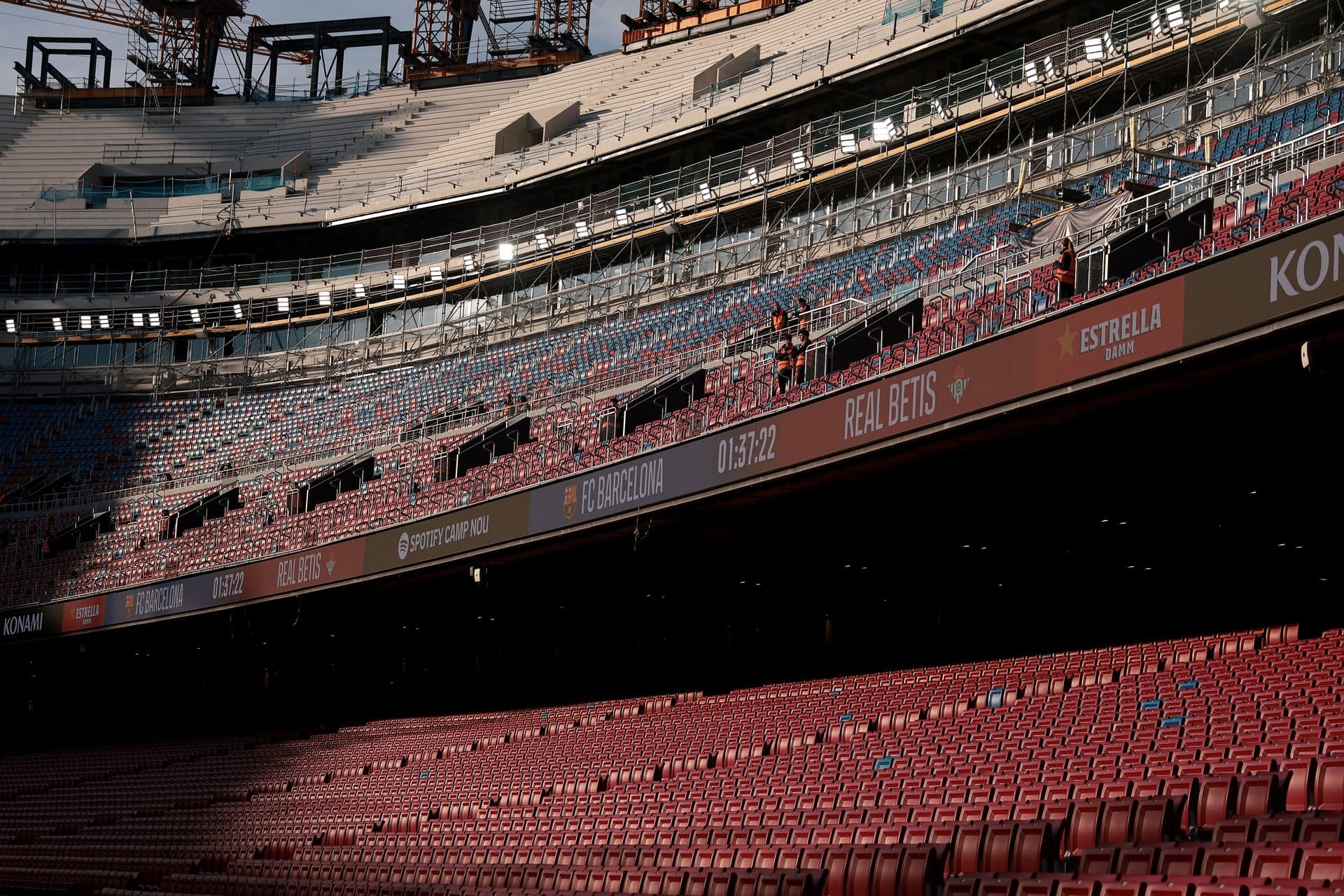
The Spotify Camp Nou - European football’s cathedral, the 99,354-seat monster that once swallowed opponents whole - is still crawling back to full strength. This season, the club’s own timeline tells the real story: Barcelona’s Spotify Camp Nou will add only 6,000 new seats this season.
Six thousand. That’s it. In a stadium built to eventually hold around 105,000.
For a club of Barcelona’s scale, that number should feel absurd. In a way, it is. But there’s logic buried under the scaffolding and cranes - and under the €1.45 - 1.5 billion financing package led by Goldman Sachs, a deal that was always going to turn a flip-the-switch renovation into a slow, deliberate rebuild.
The Espai Barça project was never a sprint. The phased reopening plan always called for incremental returns: partial capacity first, then more, then more again. What looked like a quick dash in the promotional renders has become a marathon measured in construction phases, safety certifications, and matchday logistics.
Barcelona’s Spotify Camp Nou will add only 6,000 new seats this season - a modest bump, the next step in that grind. Not a headline-grabbing leap. Just proof the machine is still moving.
The Snail’s Pace Return: Why Camp Nou Is Only Adding 6,000 Seats This Season
Every empty seat is missing revenue. Barcelona know this better than almost anyone.
The club has pulled its financial levers so hard in recent years that some are bent. The Spotify naming rights deal, announced in March 2022 and reportedly worth about €280 million over 12 years (2022 - 2034), was one lifeline. The Goldman Sachs-led financing package - roughly €1.45 - 1.5 billion - was another.
But naming rights and loans don’t fill seats. Fans do. And right now, fans can only fill what’s been signed off, inspected, and opened.
📊 €280 million over 12 years (2022 - 2034) - the reported value of the Spotify naming rights deal, a financial pillar of the Espai Barça project.
Adding just 6,000 seats this season means the club still operates under a reduced-capacity reality. Matchday income suffers. Season ticket allocations suffer. The raw atmosphere inside the bowl suffers.
The phased approach makes sense from a safety and engineering standpoint. From a competitive one, less so. Barcelona are trying to rebuild a squad, balance a budget, and chase trophies while their home remains a construction site with a pitch in the middle.
| Aspect | Impact of Adding 6,000 Seats |
|---|---|
| Matchday income | Marginal increase; full revenue still years away |
| Season ticket allocations | Slightly more members accommodated |
| Stadium atmosphere | Incremental noise return; not yet full fortress |
| Competitive edge | No immediate effect on squad or wage bill |
The Money Math Behind the Slow Build
Let’s be blunt: 6,000 seats won’t transform Barcelona’s season.
It won’t close the gap to Real Madrid on its own. It won’t solve the wage bill. It won’t make the Spotify Camp Nou feel like the fortress it was in 2015.
What it does is signal direction. The phased reopening remains on track. The full ~105,000-capacity vision isn’t dead - just delayed, expensive, and complicated in all the ways megaprojects always are.
For fans, the practical impact is straightforward: slightly more tickets for select matches, slightly more revenue on the books, slightly more noise in the bowl. For rivals, nothing changes.
The real question isn’t whether 6,000 new seats matter this season. It’s whether the full renovation will be finished before the club’s competitive window slams shut again.
Right now, the answer is written in concrete, steel, and a very cautious construction calendar. Barcelona are home. They’re just not all the way back yet - and this season, 6,000 seats is as close as they’ll get.
For the latest on the Espai Barça project, check FC Barcelona’s official site and La Liga’s official records.