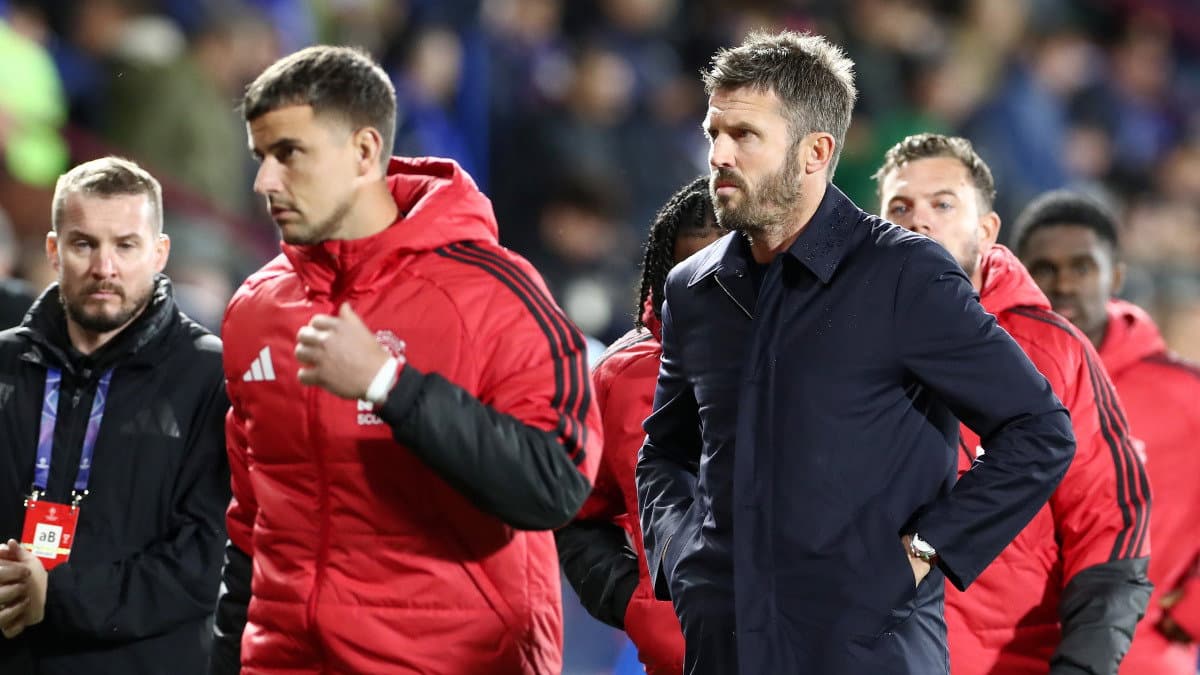
The final whistle had barely stopped echoing around the stadium when the mood around Manchester United's squad shifted from embarrassment to something far colder. Como had just taken United apart - a humiliation that will sting for weeks - and at the heart of the fallout stood Michael Carrick, a man who knows exactly what wearing that badge is supposed to demand. In his post-match media duties, Carrick didn't hide behind tactics, luck or refereeing. He aimed straight at the players, and the quote he delivered has already become the defining line of United's season: "You can't choose when you want to…"
That's not analysis. That's an accusation. Carrick is questioning whether this group understands that effort, standards and application aren't optional extras - to be switched on for big nights and switched off when the mood dips. After a night like Como, nobody in that dressing room can pretend they didn't hear it.
What Carrick Actually Said
The line landed in full context during his post-match appearance, and it's worth reading as it was delivered rather than as a soundbite. Carrick's core point was about consistency of commitment - the idea that desire and standards must show up every single time you pull on the shirt, not just when the occasion demands it. "You can't choose when you want to…" is a short sentence with a long reach: it indicts application, not formation.
Crucially, the tone was measured rather than explosive - and that made it cut deeper. A rant can be dismissed as emotion. A former player, calm and deliberate, telling you the mentality isn't right? That's a verdict. He was addressing the players directly, and everyone in the room knew it. For the full breakdown of his remarks, check the post-match reaction over at BBC Sport, which carried the immediate fallout from the night.
Why the Accusation Cuts Deeper Than the Scoreline
Here's the real story, and it has nothing to do with the scoreboard. A former United midfielder - someone who won trophies by turning up relentlessly - has now publicly questioned whether this dressing room has the mentality for the shirt. That's a grenade in the middle of the camp, and it landed with the fans too.
The inconsistency has become a recurring theme, and that's precisely why Carrick's words resonate. One week the effort looks like a team fighting for a manager's future; the next it looks like a group waiting for someone else to fix it. Standards at United aren't negotiable, and the gap between the required level and the level shown against Como is what Carrick has put under a public microscope.
📊 A damning accusation aimed at the players, not the tactics - Carrick's post-match framing shifted the entire narrative from the result to the squad's mentality.
Fan reaction was immediate and split down familiar lines: some praising Carrick for saying what the terraces have been screaming for weeks, others arguing a club legend should keep criticism in-house. Pundits followed suit, with the accountability question dominating phone-ins and front pages. Related coverage across Sky Sports has amplified the debate rather than quietened it.
What Happens Next: Pressure, Response, and Reckoning
Attention now swings to United's next fixture - the immediate, unavoidable test of character. Carrick's words will hang over the training ground all week, and the response on the pitch will tell us whether this squad treats criticism as fuel or as noise. The manager faces his own pressure too: he must publicly back his players while privately demanding the standards Carrick says are missing.
There is a version of this story where Carrick's accusation becomes a rallying point - the moment the dressing room decided to prove the legend wrong. There's also a version where it becomes a running sore, quoted every time effort dips between now and the end of the season.
So here's the big question for Get Sports Journals readers: was Carrick right? And more importantly - can United prove him wrong?