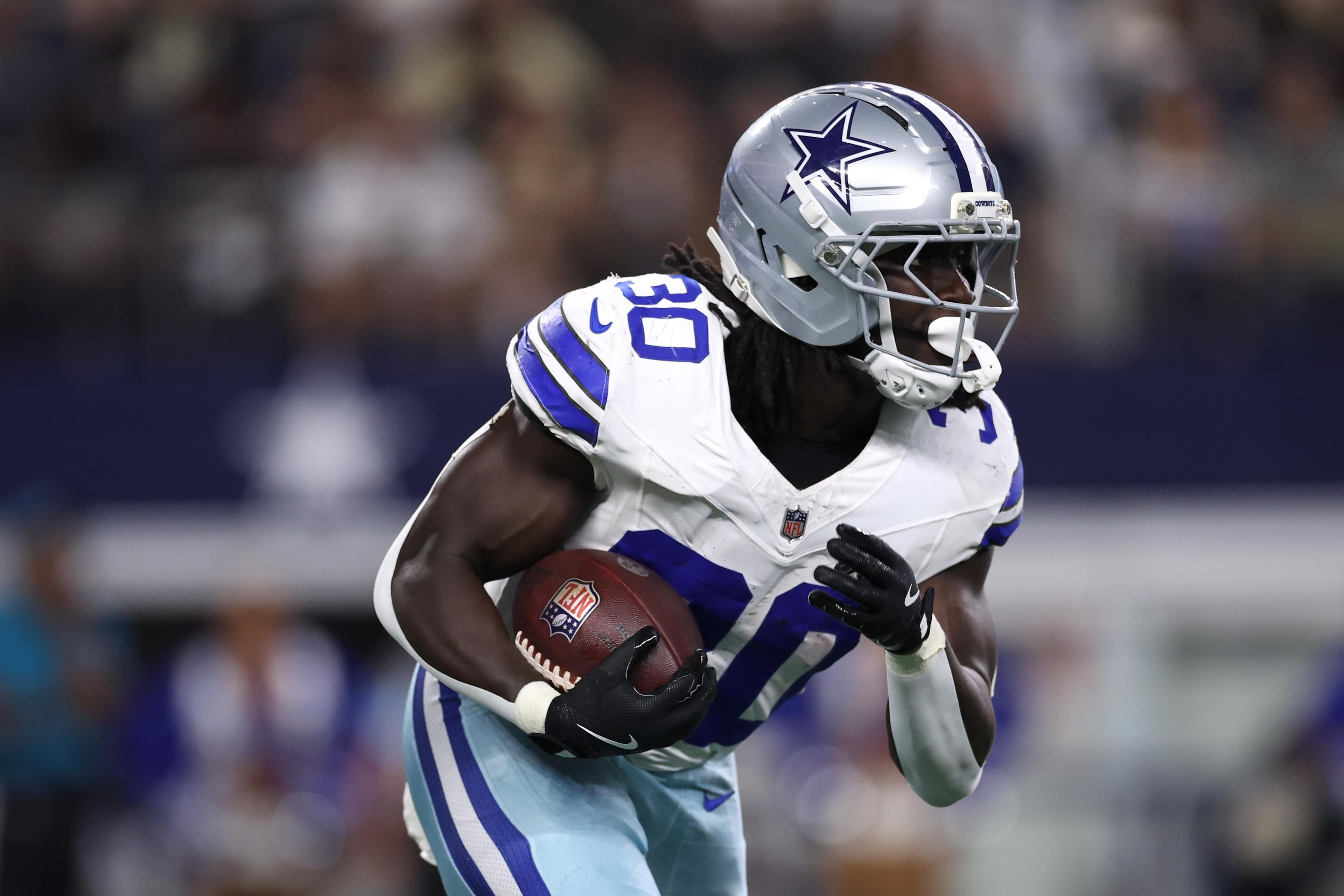
The Cowboys are making moves. Dallas has signed running back Israel Abanikanda to the active roster, adding depth and fresh legs to a backfield that has faced questions through the early stretch of the 2026 season. It's the kind of under-the-radar transaction front offices love - low risk, real upside, and a chance to catch lightning in a bottle.
Abanikanda isn't a household name yet. But he's a player with a story, a chip on his shoulder, and something to prove. For a Cowboys team grinding through the early gauntlet, that combination is exactly what you want. This isn't a blockbuster splash or a headline-grabbing trade. It's a football move - the kind that quietly shapes a roster in September and pays off in December. Dallas is betting on traits, opportunity, and hunger. In a league where running back depth gets tested every single week, that's rarely a bad bet.
Who Is Israel Abanikanda?
Abanikanda entered the league as a fifth-round pick (No. 143 overall) by the New York Jets in the 2023 NFL Draft out of Pittsburgh. In college, he flashed serious production - the kind of burst and contact balance that made him a draft-day value. His rookie window in New York never fully opened. Like so many mid-round backs, he found himself bouncing through roster and practice-squad cycles searching for a real opportunity.
Now he gets that shot in Dallas. For a player who has spent the last few seasons grinding for a genuine window, landing in a backfield that values explosive runs is a dream fit. The Cowboys' coaching staff has a reputation for giving opportunities to backs who earn them on the practice field and on special teams. Abanikanda arrives with exactly that mindset. He knows the deal: produce, or the carousel spins again. That edge is precisely why Dallas wanted him.
Now let's talk traits, because that's what this move is really about. When you sign a back mid-season, you're not buying a résumé - you're buying a skill set.
📊 No. 143 overall: Abanikanda's draft slot, a fifth-round pick by the Jets in 2023 out of Pittsburgh - exactly the kind of mid-round pedigree that turns into value signings two or three years later.
What Abanikanda Brings to the Cowboys' Backfield
The Cowboys didn't make this move for headlines. They made it for traits.
Fresh Legs and Home-Run Speed
Abanikanda's calling card has always been his ability to hit the hole and go. He's a one-cut runner with acceleration that can turn a crease into a chunk play. On a team that values explosive plays, that profile fits. Dallas doesn't need him to carry 20 times a game - they need him to make the one cut that flips field position. In a division where every game seems to come down to a single explosive snap, a runner who can house it from anywhere is a genuine weapon.
Depth With a Purpose
Every NFL backfield gets tested - wear and tear, injuries, and the grind of a 17-game season. Adding a back with developmental upside gives Dallas insurance now and flexibility later. If he produces, the Cowboys found something. If he doesn't, the cost was minimal. That's the beauty of this type of addition: zero downside, real ceiling.
Table: Anatomy of a Low-Risk Running Back Flyer
| Factor | What Dallas Gets | Why It Matters |
|---|---|---|
| Cost | Minimal - practice-squad-range investment | No salary-cap strain, no lost draft capital |
| Age & tread | Young legs with limited NFL wear | Fresh for the December stretch run |
| Skill set | One-cut burst, acceleration, home-run ability | Fits an explosive-play offense |
| Motivation | A player fighting for his NFL life | Practice intensity and urgency every day |
| Path to snaps | Special teams first, offense later | Earns trust the old-fashioned way |