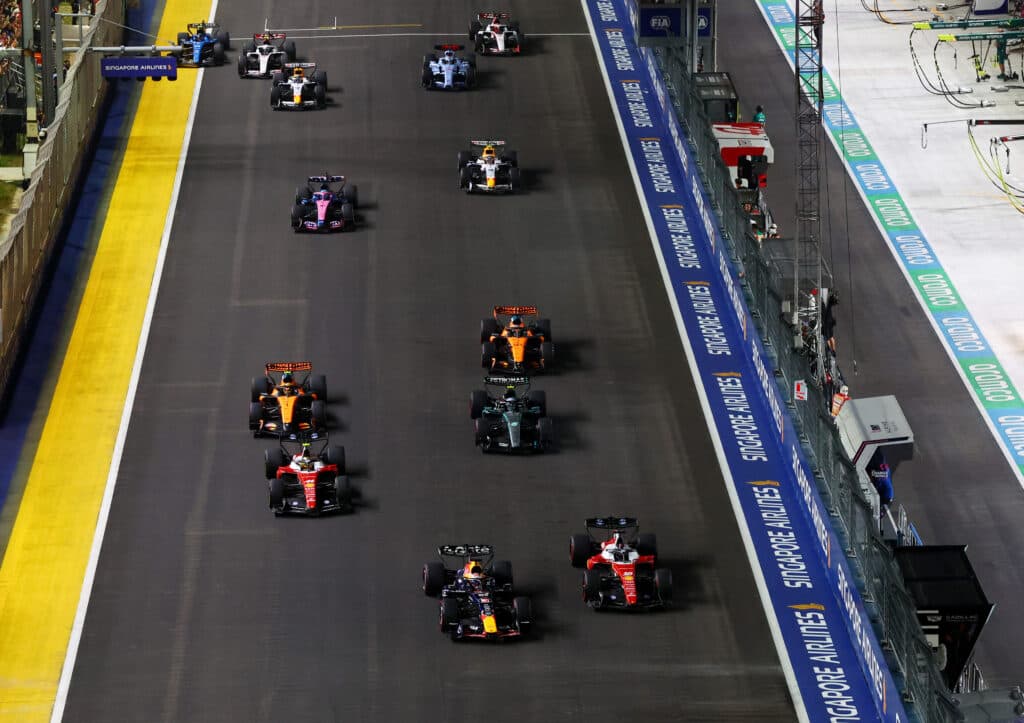
The governing body's latest financial regulations update promises sharper enforcement - but teams are warning of new grey areas, heavier admin burdens, and fresh room for disputes.
Formula 1's financial rulebook just got another layer - and not everyone is thrilled about it. The FIA has pressed ahead with a significant package of cost cap changes, billed as a tightening of oversight designed to sharpen enforcement and close loopholes. The paddock's reaction, though, has been far from unanimous applause. Teams are raising red flags over added complexity, administrative strain, and the suspicion that new wording creates as many questions as it answers. Here's everything you need to know about why the FIA Deploys Major F1 Cost Cap Rule Change to Add More Complexity Amid Resistance from rivals up and down the pit lane.
The Rule Change at a Glance: What the FIA Is Actually Doing
Let's set the scene. The Cost Cap Administration (CCA), the FIA's financial watchdog, has overseen F1's cost cap since it first applied in 2021 - a regime that started at $145M and stepped down to $140M in 2022 and $135M in 2023, with inflation indexing added in later years to keep the ceiling realistic as global costs shifted.
Now the governing body has moved forward with a fresh set of rule changes framed as a tightening of oversight. Critics are already calling it added "complexity" layered onto an already dense regulatory framework - and they're not wrong that the rulebook keeps growing.
So what's actually changing? The headline updates centre on three fronts: revised reporting mechanics that change how teams document and submit their financial data; expanded documentation and audit powers for the CCA, giving investigators broader scope to request records and dig deeper into compliance; and updated treatment of specific cost categories, which reshapes how certain expenditures are classified under the cap. In plain terms, the financial rulebook is longer, the paper trail is heavier, and the watchdog's toolkit is bigger.
Importantly, this didn't happen in a vacuum. The cap's credibility was earned on the back of real enforcement - Red Bull's October 2022 sanction, a $7M fine plus a 10% reduction in aerodynamic testing for a 2021 minor overspend, and Aston Martin's 2023 penalty for procedural breaches. Those cases proved the CCA will act. The question now is whether more rules make that action cleaner - or messier.
| Year | Cap Level | Key Regulatory Event |
|---|---|---|
| 2021 | $145M | Cost cap first applied |
| 2022 | $140M | Red Bull sanctioned (Oct 2022): $7M fine + 10% aero testing reduction |
| 2023 | $135M | Aston Martin penalised for procedural breaches |
| Later years | Indexed | Inflation indexing introduced; new oversight package advanced |
📊 $7M plus a 10% aerodynamic testing cut - the Red Bull sanction that proved the cost cap has real teeth, setting the enforcement benchmark every team now measures against.
Why the FIA Says It's Necessary
From the governing body's side, the logic is straightforward. The CCA argues the changes close loopholes before rivals can exploit them, speed up the resolution of breach cases, and make compliance decisions more transparent and defensible under scrutiny.
The messaging from the FIA boils down to one idea: clearer rules for everyone - even if the rulebook itself grows longer in the process. Officials maintain that tighter definitions remove ambiguity rather than create it, and that a stronger audit mandate means fewer drawn-out investigations dragging through a season.
There's a sporting argument, too. With cost cap compliance now central to competitive fairness, a watchdog with sharper tools should be able to deliver verdicts faster - keeping championship fights on the track rather than in hearing rooms. Whether teams buy that framing is another matter entirely.
Why Teams Are Pushing Back
Here's where it gets spicy. The core objection from the garages is simple: more rules can mean more ambiguity, not less. New definitions and reporting categories create fresh battlegrounds for interpretation - and in a sport where lawyers already read the financial regs like a title fight, every new clause is a potential flashpoint.
Then there's the administrative strain. Compliance now demands serious firepower from finance and legal departments, and smaller teams - already stretched thinner than the giants - feel the squeeze hardest. More documentation, more audit requests, more people needed to fill in the forms. For leaner outfits, that's a real competitive tax.