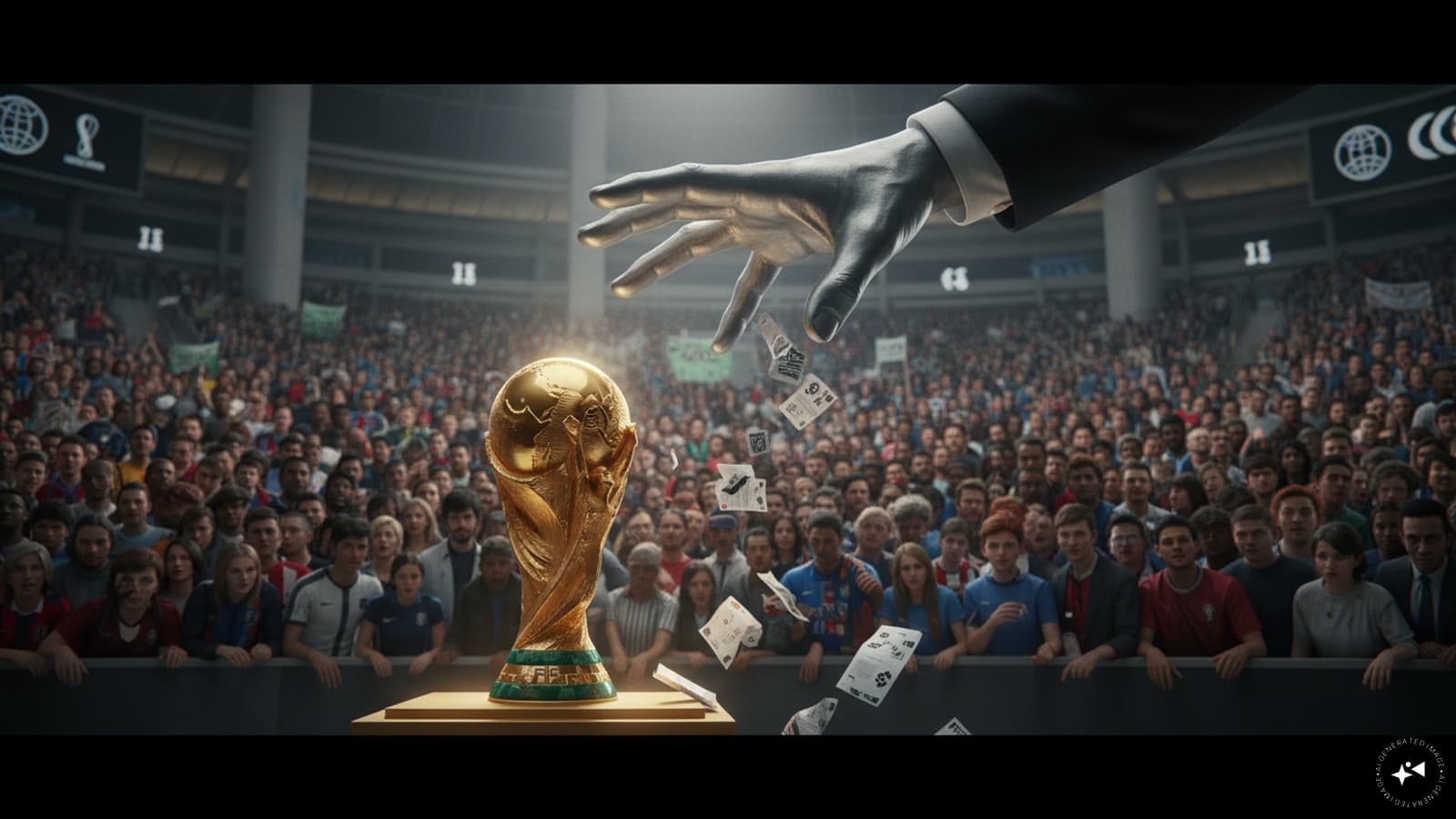
Football's power structure just got shaken to its core. FIFA President Gianni Infantino formally abandoned the controversial proposal to sell a 20% stake in World Cup commercial rights to private equity investors - a stunning reversal that sent shockwaves through the sport. The announcement landed during the 74th FIFA Congress in Miami on May 15, 2026, closing the curtain on a months-long war between FIFA's leadership and a coalition of European heavyweights, player unions, and even its own commercial partners.
The deal was monstrous in scale. Investment giants Apollo, CVC, and Silver Lake were poised to pump $3.5 billion upfront into a new commercial entity dubbed FIFA Plus. But opposition was ferocious from the opening bell. UEFA led the charge, with the German DFB and Spanish RFEF backing the fight, while FIFPRO - the global players' union - warned that a permanent profit siphon would starve grassroots development. The resistance never cracked. No agreement was ever signed. Zero. Nada. The dream deal crumbled under the weight of its own ambition.
Infantino, speaking at a June 30 press conference in New York, offered a public apology for what he called the "distraction" and confirmed that none of the 2026 World Cup profits would be encumbered. Here's the kicker for fans: the tournament, which wrapped dramatically on July 19 with Brazil edging France 3-2 at MetLife Stadium, produced a net surplus of $1.85 billion. That money now flows straight to member associations - no royalties owed to outside investors. The beautiful game just dodged a bullet.
📊 $1.85 billion net surplus from the 2026 World Cup - Every penny stays inside football, with zero private equity royalties to follow.
The Financial Aftermath: Reworking the Numbers
Let's be real - this U-turn came with scars. The abandonment carried serious financial consequences that FIFA is still navigating.
| Metric | Original Projection | Revised Forecast | Change |
|---|---|---|---|
| Total Revenue | $12.0 billion | $10.8 billion | -$1.2 billion |
| Private Equity Injection | $3.5 billion | $0 | -$3.5 billion |
| Net World Cup Surplus | $1.5 billion | $1.85 billion | +$0.35 billion |
| Top Tier Sponsorship (Aramco) | $180M per tournament | $150M per tournament | -$30M |
FIFA's revised 2026 revenue forecast now sits at $10.8 billion - a $1.2 billion downgrade from the original projection. The shortfall traces entirely to that lost private equity injection, which FIFA had foolishly baked into its 2025 budget planning. To close the gap, particularly for the expanded 48-team Club World Cup, FIFA confirmed on July 1 it would pivot to a traditional syndicated bank loan.
The $2.1 billion facility, led by JPMorgan and Bank of America, carries a floating rate of SOFR plus 220 basis points - materially pricier than the mooted private equity deal. But the pain didn't end there. FIFA's bargaining position weakened dramatically after the U-turn, forcing the organization to renegotiate its "Top Tier" sponsorship packages. The anchor deal with Saudi Aramco, signed July 22, was slashed from $180 million per tournament to $150 million - a glaring signal of reduced leverage.
📊 $2.1 billion replacement bank loan at SOFR + 220 bps - A significantly costlier funding mechanism than the abandoned private equity deal.
Legal Legacy and Market Signals
The FIFA Plus entity survived, though not in its original form. On July 10, FIFA renamed the vehicle "FIFA Legacy & Development Co." and narrowed its mandate to managing broadcast licensing for legacy archives. The entity remains 100% FIFA-owned with zero external equity holders. Clean hands, for now.
Meanwhile, the UEFA Executive Committee voted July 28 to restore the full 50% solidarity payment to European clubs for the 2027 Club World Cup - reversing a 12% reduction introduced in 2025 to sweeten the private equity model. That vote is binding and effective immediately.