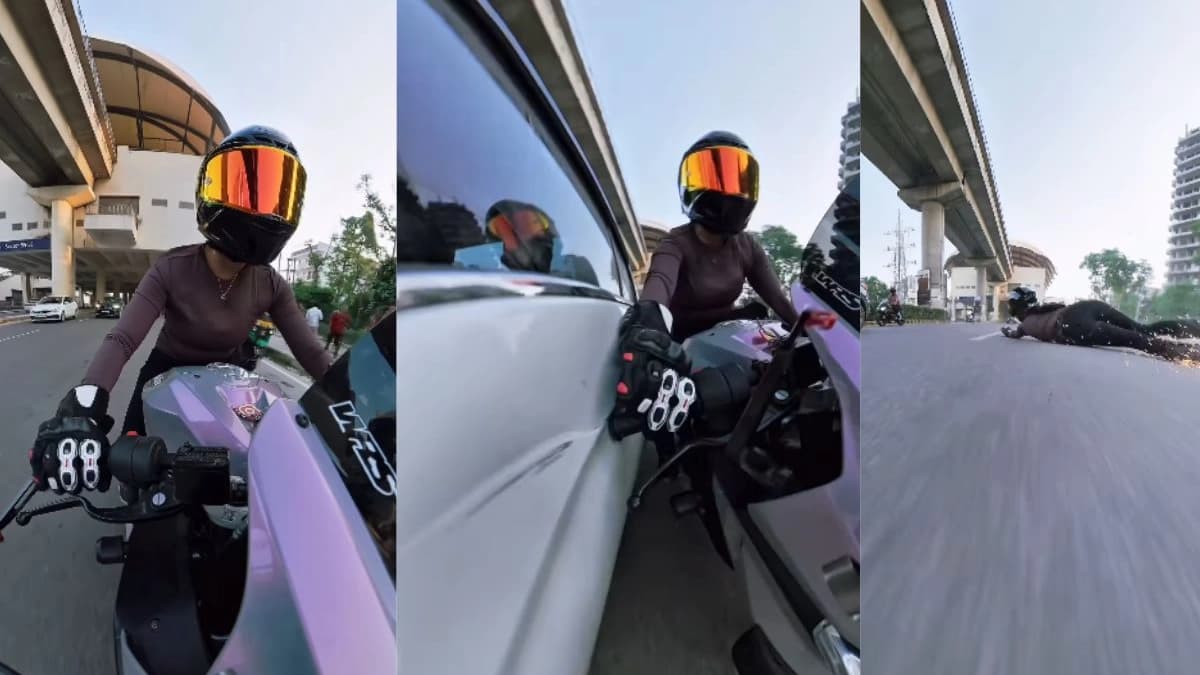
A terrifying road-rage episode in Gurugram has exploded across social media this week. A female biker alleges that a car deliberately chased her, struck her motorcycle, and then sped away - and the entire sequence was captured on camera. The footage has since gone viral, showing the kind of split-second danger that cyclists, motorcyclists, and runners face every single day on Indian roads. For the sports community, this isn't just another crime story. It's a reminder that the people most vulnerable on our streets are often the same ones chasing personal records at dawn.
The rider's account - a car tailing her, making contact, then fleeing - has reignited the debate about how safe India's roads really are for two-wheelers and the athletes who train on them. According to her version of events, the chase was no accident. The impact threw her bike off balance. The car never stopped. What makes the case so powerful is the visual evidence: the clip has become the centerpiece of her complaint and the reason the story spread far beyond Gurugram. Viral footage has become the modern tool for road-users demanding accountability when a hit-and-run driver vanishes into traffic.
Table: Why Viral Road-Incident Footage Matters to Sports Audiences
| Factor | Why It Resonates | Sports Connection |
|---|---|---|
| Visual proof | Camera evidence can't be dismissed easily | Athletes rely on footage for safety claims |
| Two-wheeler vulnerability | Riders have minimal protection | Cyclists and triathletes share the risk |
| Public pressure | Virality accelerates official attention | Fans amplify calls for safer roads |
| Community response | Riders rally around victims | Training groups demand protected lanes |
📊 Hit-and-run cases remain one of the most reported road-safety concerns in Indian cities - and two-wheeler riders are consistently among the most exposed road users.
What Gurugram Police and Local Reports Say
As of September 14, 2026, local reporting indicates the biker has filed a formal complaint, and investigators are reviewing the camera footage along with any available traffic-camera or CCTV records from the route. That's the crucial next step: a video clip is powerful, but police need to match a vehicle, a registration, and a driver to it. Gurugram's traffic infrastructure - with its cameras, toll records, and highway checkpoints - should make that traceable if the footage is clear enough.
The pattern here is familiar to anyone who follows road-safety coverage: a rider comes forward, footage circulates, public outrage builds, and then the question becomes whether the investigation keeps pace with the anger. Authorities have repeatedly urged road users to report incidents immediately and preserve footage, precisely because these cases move fast and evidence disappears faster. For the rider at the center of this story, the outcome now hinges on whether the clip leads to an identification - and whether that identification leads to accountability. Until then, the case stands as an open question that thousands of riders are watching closely.
The Sports-Community Angle: Road Safety for Cyclists and Riders
Here's where Get Sports Journals readers should lean in. Every weekend, thousands of Indian cyclists, runners, and motorcyclists head out before sunrise to train. They share the same roads, the same blind spots, and the same risk as the biker in this footage. When a driver chases and strikes a rider, it isn't an abstract crime statistic - it's the nightmare scenario every athlete who trains on public roads silently calculates before every session.
📊 Two-wheeler riders make up a large share of India's road fatalities - a sobering number that cycling and riding communities cite when pushing for safer infrastructure.
📊 Camera footage has become the single most effective tool for hit-and-run accountability - because it converts a "he said, she said" dispute into documented evidence.
The takeaway for the sports world is practical, not just emotional. Riding groups and cycling clubs have increasingly pushed for helmet cams and group-ride protocols; running communities have lobbied for safer morning routes and better lighting. This incident underscores why. If a trained rider on a well-lit road can be chased and struck, then the safety net for everyone else is thinner than we'd like to believe. For updates on this case and the broader fight for rider safety, follow The Times of India and Hindustan Times for verified reporting as the investigation develops.
Until police confirm an arrest, the story of the Gurugram biker says car chased her, hit bike and fled; incident caught on camera remains an open file - but a loud one. And in a country where athletes and everyday riders share the same asphalt, loud is exactly what it needs to be.