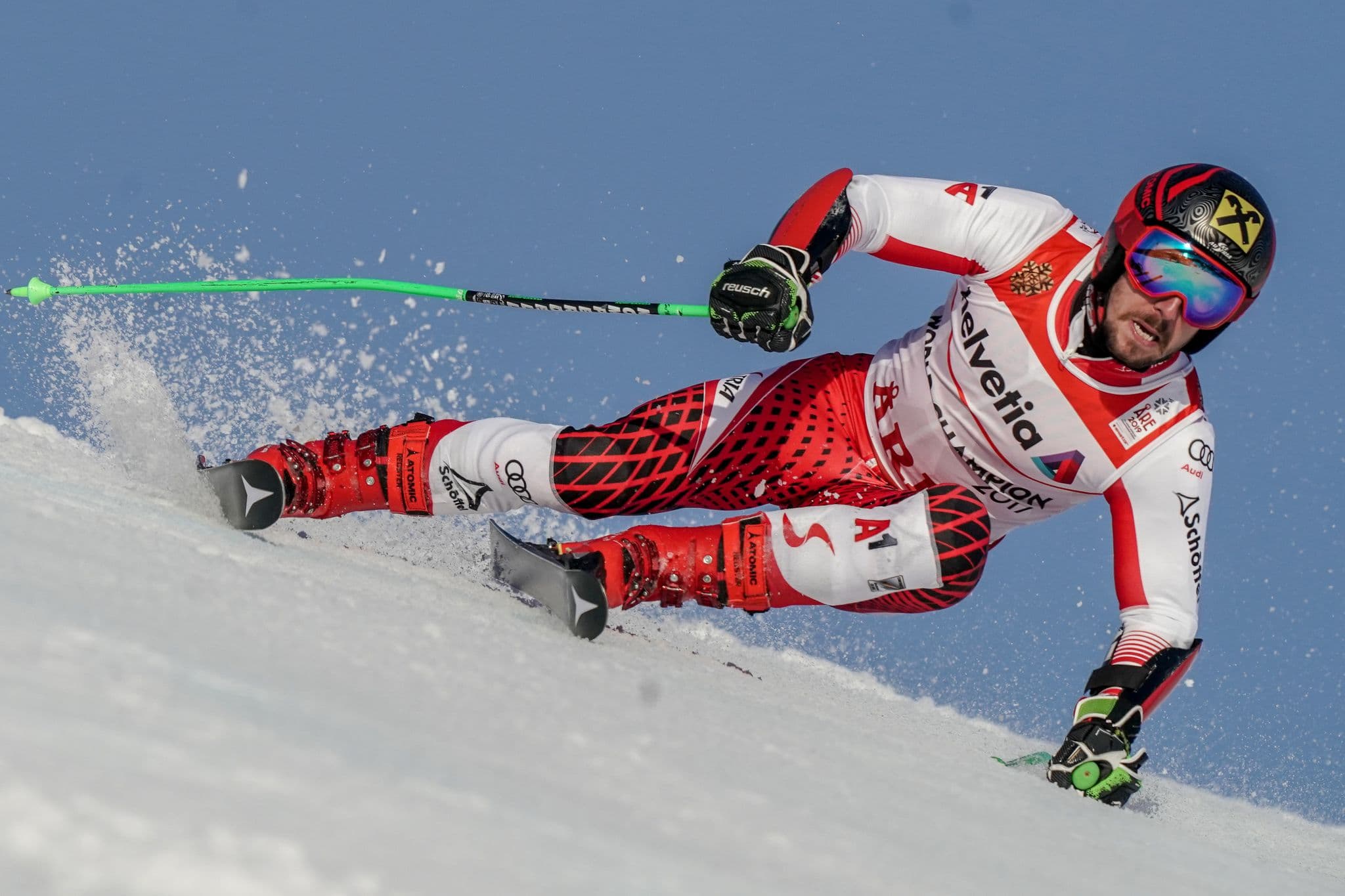
The comeback that keeps rewriting its own script just added another chapter. Alpine skiing great Marcel Hirscher has received World Cup wild card clearance - and suddenly the 2026-27 season has a jolt nobody saw coming. Again.
When Hirscher walked away in September 2019, it felt like the end of an era. Eight consecutive overall World Cup titles. Sixty-seven race wins. A stranglehold on the sport that nobody since has come close to replicating. Then came the announcement that flipped the ski world on its head: Hirscher wasn't just coming back - he was coming back for the Netherlands, the country of his mother, racing under a Dutch license.
A legend returning is one thing. A legend returning under a different flag, years after retiring, is something else entirely. His first comeback start came at Sölden in October 2024, and the ski world watched with bated breath.
Now, with the FIS wild card mechanism in play for the new campaign, Hirscher's path back to the World Cup start gate is locked in. Here's how we got here - and why it matters.
How the Wild Card Actually Works
The wild card isn't just a favor handed to a big name. Under FIS rules, a returning or foreign-licensed athlete can be granted a personal starting place - essentially bypassing the standard national quota system that governs World Cup entries. The mechanism was introduced specifically to allow star athletes to compete outside the usual nation-based allocation.
For Hirscher, this is critical. The Netherlands doesn't have the same Alpine infrastructure or quota depth as Austria, so without the wild card, his return would have been logistically impossible. The wild card gives him a direct lane back into World Cup races.
And there's no disputing the resume he's bringing back to the circuit.
| Milestone | Figure |
|---|---|
| Overall World Cup titles | 8 consecutive (2011-12 to 2018-19) |
| World Cup race wins | 67 |
| Retired (first time) | September 2019 |
| Comeback World Cup start | October 2024, Sölden (giant slalom) |
| Racing license | Netherlands |
📊 8 consecutive overall World Cup titles - a men's record streak that no active skier has come close to touching.
Why This Matters Beyond One Athlete
A Star-Powered Boost for the Sport
Let's be honest - Alpine skiing has been searching for a jolt. Viewership in the post-Hirscher era has been solid but rarely electric. The sport's biggest names have cycled through, but nobody has commanded the same gravitational pull as the Austrian-turned-Dutchman.
Hirscher's return brings eyeballs. Broadcasters know it. Sponsors know it. FIS knows it. Every race he enters becomes a storyline, not just a result - and that's the kind of energy a niche winter sport desperately needs in an increasingly crowded sports landscape.
📊 67 World Cup race wins - the benchmark that made Hirscher one of the greatest to ever click into bindings.
The Risks Nobody's Ignoring
Of course, this isn't a fairy tale without complications. Hirscher is years removed from his peak, and the current generation - the Odermatt-era skiers - has evolved the sport technically and physically. Racing at the highest level after a long layoff is brutal, even for a legend.
There's also the question of fairness. Does the wild card hand an unfair advantage to a returning star over younger athletes grinding through national quotas? Critics have raised the point, and it's not without merit. But FIS's position is clear: the wild card exists to draw competitive talent and attention back to the sport, not to bypass merit entirely. Hirscher still has to ski fast to matter.
What to Watch For Next
The immediate focus is on how Hirscher performs in his return races. Every start is a measuring stick - not just for him, but for whether the wild card experiment is working as intended. Results, splits, and scheduling updates land first on the official FIS Alpine skiing hub, with race analysis from the Bleacher Report winter sports desk.
For fans, the appeal is simple: one of the greatest to ever click into bindings is back on the World Cup circuit, wearing unfamiliar colors, chasing unfamiliar goals. Whatever happens on the snow, that story alone is worth following.
If there's one thing we've learned about Hirscher, it's that writing him off has never been a smart bet.