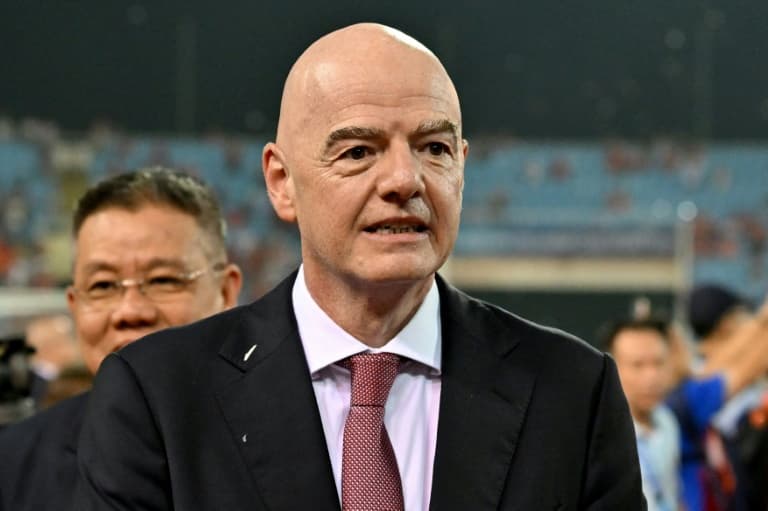
The room went quiet, then it got loud. Gianni Infantino opened with an apology - and walked out into a fresh wave of criticism, as federations, players' unions and league officials accused FIFA of pushing a World Cup expansion plan with zero transparency and even fewer concrete details.
According to accounts emerging from the October 2026 sit-down, the FIFA president acknowledged the backlash and said he was sorry for how the process had unfolded. What he didn't deliver, attendees say, was a single straight answer on money, calendars, venues or who actually benefits. That gap between regret and detail is now the story.
"An apology is not a plan," one official reportedly said afterward. For a governing body that has spent years selling expansion as growth, that line might be the most damaging soundbite of the week.
The tension didn't come out of nowhere. At FIFA's 2025 Congress in Asunción, member associations were already demanding greater transparency on how revenues from the expanded 48-team men's World Cup - which launches in North America in 2026 - would be distributed. The 2023 Women's World Cup, the first to feature 32 teams, delivered record attendance and record revenues, yet players' unions from multiple continents publicly complained that compensation and resource allocation remained opaque. Those grievances have now spilled into the room where the next big plan is being pitched.
What Was Actually on the Table
The meeting centered on FIFA's contested World Cup proposal - the latest in a series of expansion and scheduling overhauls that have rattled the global game. Critics arrived with three core demands:
- Financial transparency: where the projected revenue goes, and how much reaches member associations versus FIFA coffers.
- Player welfare: how an already congested match calendar absorbs more games without breaking athletes.
- Governance: who was consulted, and why major stakeholders learned of key decisions through leaks rather than boardrooms.
None of those questions got a firm answer, multiple attendees indicated. Instead, they got an apology - framed as an acknowledgment that FIFA had moved too fast and communicated too little.
The calendar crunch is real. The 2026 men's World Cup expands to 48 teams and 104 matches across the United States, Canada and Mexico, and the 2027 Women's World Cup in Brazil is already locked in. Players now face an unprecedented stretch of major tournaments. FIFPRO and multiple domestic leagues - including the Premier League and LaLiga - have publicly warned that adding more fixtures without guardrails risks turning manageable congestion into a full-blown welfare crisis.
📊 104 matches at the expanded 2026 men's World Cup - the largest tournament in FIFA history, with the 2027 Women's World Cup in Brazil adding further strain to a global calendar that unions say is already at breaking point.
Financial questions remain equally sharp. FIFA reported record revenues of $11 billion for the 2027 - 2030 commercial cycle, yet member associations have repeatedly asked for documented breakdowns of how those funds flow down to grassroots and national programs. The demand is no longer polite. It's contractual - and it's coming with legal language attached.
Why the Silence Matters
This isn't a public-relations blip. It's a credibility test at the worst possible time. Leagues and players' unions have grown bolder, legal threats have moved from whispers to formal warnings, and member associations that once rubber-stamped FIFA proposals now coordinate against them.
Apologizing without answering questions feeds the exact narrative FIFA wants to kill: that expansion serves the institution, not the sport. And with no verified figures or timeline emerging from the meeting, the vacuum is already being filled by speculation - which is precisely how Infantino offers apology but 'no answers' at FIFA meeting over World Cup plan becomes the headline rather than the subplot.