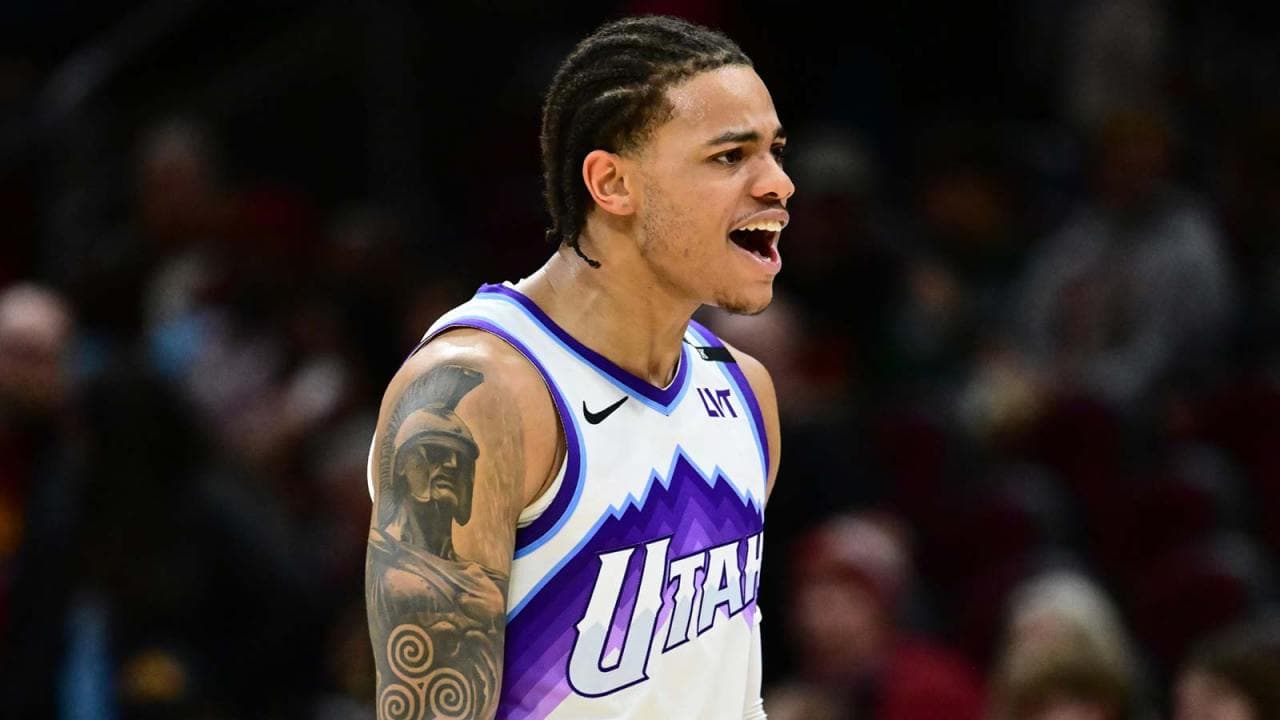
Every Jazz fan had that date circled long before the fireworks of July. September 23, 2026, doesn't just mark the start of another training camp in Salt Lake City - it marks the moment the basketball world finally understood what Keyonte George's summer had been building toward. For weeks, the whispers had been circulating: a rookie-scale extension, a franchise-altering commitment, a number that would have sounded absurd two years ago. Now, with a reported $157.5 million extension framework dominating Jazz rumors, nobody's asking whether George earned it. They're asking how one summer sealed a fate that once seemed impossible to predict.
The Jazz didn't stumble into this. They watched. They waited. And by the time September rolled around, the decision had essentially made itself.
From Lottery Pick to Franchise Cornerstone
When Utah selected George with the 16th pick in the 2023 NBA Draft, the pitch was simple: a scoring guard with real shot-creation chops, a player who could grow into something special if the development curve cooperated. Two seasons later, "special" stopped feeling like a projection and started feeling like a floor.
The Scoring Leap Nobody Saw Coming
George's jump wasn't gradual - it was a detonation. The mid-range pull-up that once felt like a fallback became a weapon. The three-point stroke, streaky as a rookie, turned into a genuine gravity-creator, forcing defenses to chase him over screens and opening driving lanes he'd never had before. By the end of the 2025-26 campaign, the numbers weren't just good for a young guard - they were the kind that make front offices reach for the checkbook before another team can even think about poaching their guy in restricted free agency.
The context around the 2023 draft class matters here. Under the NBA's collective bargaining agreement, players from that class became eligible for rookie-scale extensions during the 2026 offseason, and George's camp knew it. So did Utah's front office. Every workout, every pickup run, every closed-door session carried extra weight because everyone understood the clock was ticking.
📊 The 2023 draft class became extension-eligible in the 2026 offseason - putting Utah on a deadline to act before George's market value could be tested.
The Summer Work That Turned Heads Internally
Here's where the story gets interesting, and where the Jazz rumors started carrying real weight. George didn't spend his summer posting workout clips for clout. He spent it in the gym with the team's player-development staff, and the internal reports that leaked out described a player who had physically transformed - stronger through contact, quicker in transition, more vocal in pickup runs against teammates. When you're a franchise deciding whether to hand a nine-figure commitment to a 22-year-old, those behind-closed-doors details matter more than any highlight reel.
The Jazz saw a leader emerging. That's not something you can quantify on a spreadsheet, but it's absolutely something you pay for. According to reporting from The Athletic, rival executives had begun calling Utah about George's availability as early as mid-summer - a sign that the rest of the league saw the breakout coming before the ink was dry.
Why $157.5 Million Isn't Crazy - It's the Cost of Waiting
Let's be honest about the sticker shock. A $157.5 million extension for a player who wasn't a top-five pick sounds like madness until you run the math on what the alternative looks like.
If Utah hesitates, George enters restricted free agency in 2027 with a full season of leverage and a market full of teams with cap space and desperation. The Jazz would either match an offer sheet they don't control or watch a homegrown star walk for nothing. That's the nightmare scenario every small-market front office lives with. Charlotte learned it. Sacramento learned it. Utah decided not to.
The Cap Math Behind the Number
A near-max rookie extension in this range aligns with where the salary cap is projected to sit, and it reflects both George's production and his market value. The Jazz aren't paying for what George did - they're paying for what he's about to become. Betting on your own draft pick before he hits the open market is almost always cheaper than bidding against 29 other teams who've watched him torch them for two years.