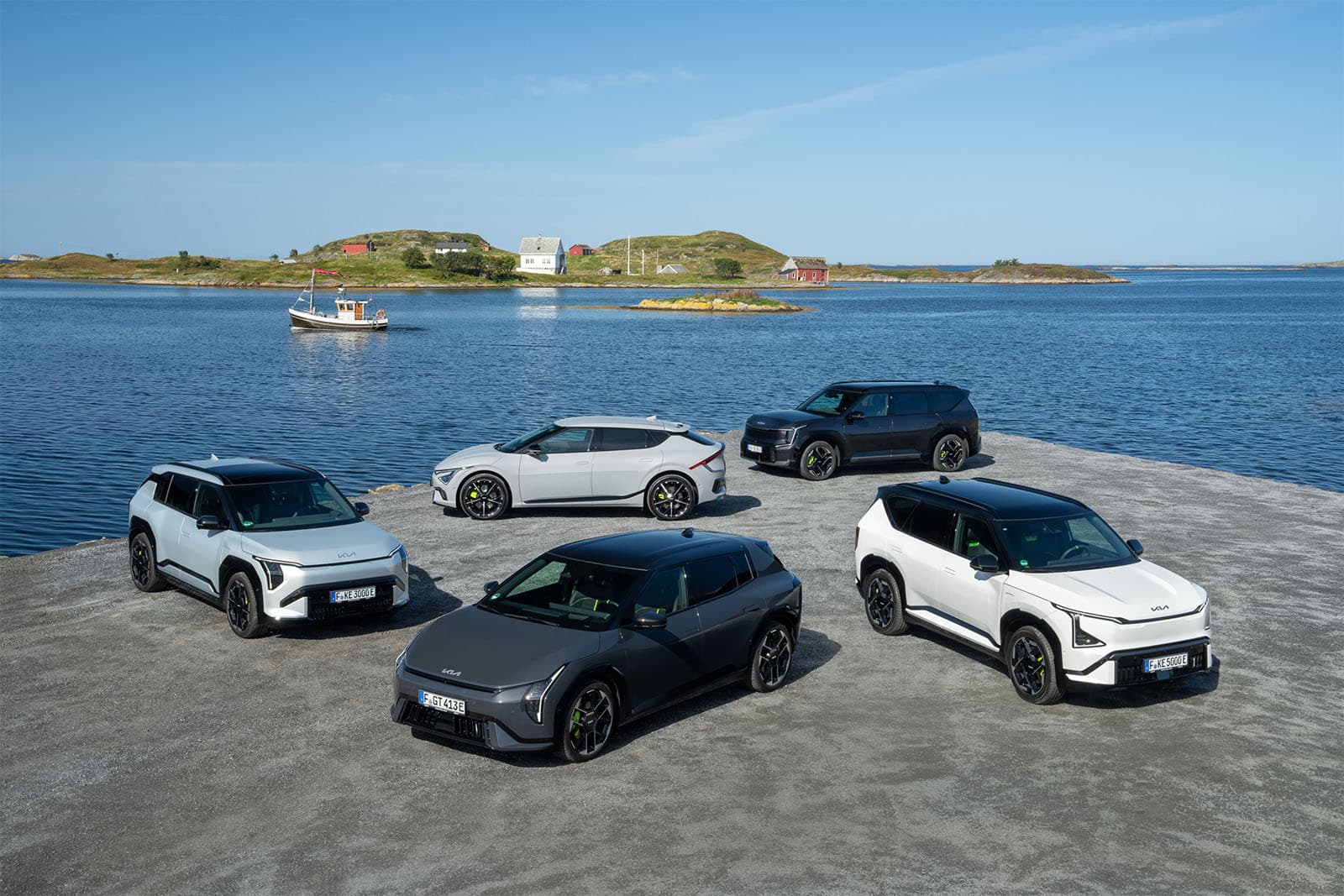
Kia's GT badges keep multiplying, from the 576-hp EV6 GT to the three-row EV9 GT - and the marketing line from Seoul is that every one of them is tuned to make you grin, not grip the wheel in fear. Here's the inside story as of October 2026.
The Biermann Blueprint: How Nürburgring Tuning Made Kia's GT Cars Approachable
The promise behind every full GT model is simple and deliberate: fun first, ferocious second. With this sub-brand, Kia isn't chasing lap-record intimidation - it's chasing repeatable, everyday joy. And that's no accident. It's a philosophy with an architect.
That architect is Albert Biermann, the former BMW M chief who ran performance development for Kia and Hyundai from 2014 until he retired as R&D head in December 2021, staying on in an advisory role. His mantra - accessible performance, everyday usability, and chassis feel over brute aggression - is baked into the DNA of every GT badge that rolls out of Korea today.
Grounding that philosophy is the credibility anchor fans love to cite: full GT models are developed with input from Kia's Test & Development Center at the Nürburgring in Germany. Real track validation, but tuned for real roads. It's the difference between a car that punishes you on a Monday commute and one that makes the same commute feel like a reward.
And before you hit the dealership, sort out the badge tiers - this trips up buyers constantly.
GT-Line vs. GT: Same Badge Family, Very Different Beasts
GT-Line means sporty appearance and trim layered on regular powertrains - think the facelifted 2025 EV6 GT-Line with its updated interior and 84 kWh battery on most trims. It looks the part. Full GT means actual performance hardware and chassis tuning. Same name, different animal.
| Feature | GT-Line | Full GT |
|---|---|---|
| Powertrain | Standard engines/motors | Upgraded performance hardware |
| Chassis | Standard tuning | Dedicated GT chassis tuning |
| Development input | Standard Kia engineering | Nürburgring Test & Development Center |
| Example | 2025 EV6 GT-Line (84 kWh battery on most trims) | EV6 GT (576 hp dual-motor AWD) |
| Buyer profile | Wants the look | Wants the feel |
Spell it out at the dealership, because the two tiers are not the same car wearing different stickers.
The Lineup: EVs Lead the Charge While the Old Guard Exits
The EVs are carrying the flag now. The EV6 GT launched in 2022 with 576 hp from a dual-motor AWD setup and a 0 - 60 mph sprint of roughly 3.4 seconds - the halo car, and the thesis in one machine. Media consensus has been consistent: playful, rear-biased handling instead of track-stiff punishment.
📊 576 hp, 0 - 60 mph in ~3.4 seconds - the EV6 GT's headline numbers, delivered with a grin rather than a grimace.
Then there's the EV9 GT, first shown at the LA Auto Show in November 2024 with U.S. on-sale announced for 2025: Kia's first three-row GT at roughly 501 hp. A family hauler with a mischievous streak. One honest flag - U.S. pricing had not been formally published as of the latest verifiable info, so treat any figure you see online as unconfirmed.
📊 ~501 hp - the EV9 GT brings GT energy to three rows, a first for the division.
The exciting wildcard is the EV3 GT, confirmed by Kia for later introduction following the EV3's 2024 global launch. Timing? Unconfirmed - which is exactly why fans keep refreshing Kia's newsroom.
The farewell tour matters too. The Stinger (3.3L twin-turbo V6, 368 hp) ended after model year 2023 - a closed chapter that built the GT legend. The Forte GT (1.6T, 201 hp) ran through MY2024 and was replaced by the K4; no K4 GT is confirmed. The K5 GT (2.5T, 290 hp) was offered through at least MY2025, future unconfirmed. For context, Kia's April 2025 CEO Investor Day outlined expanded EV and hybrid lineups but disclosed no GT-division organizational changes.