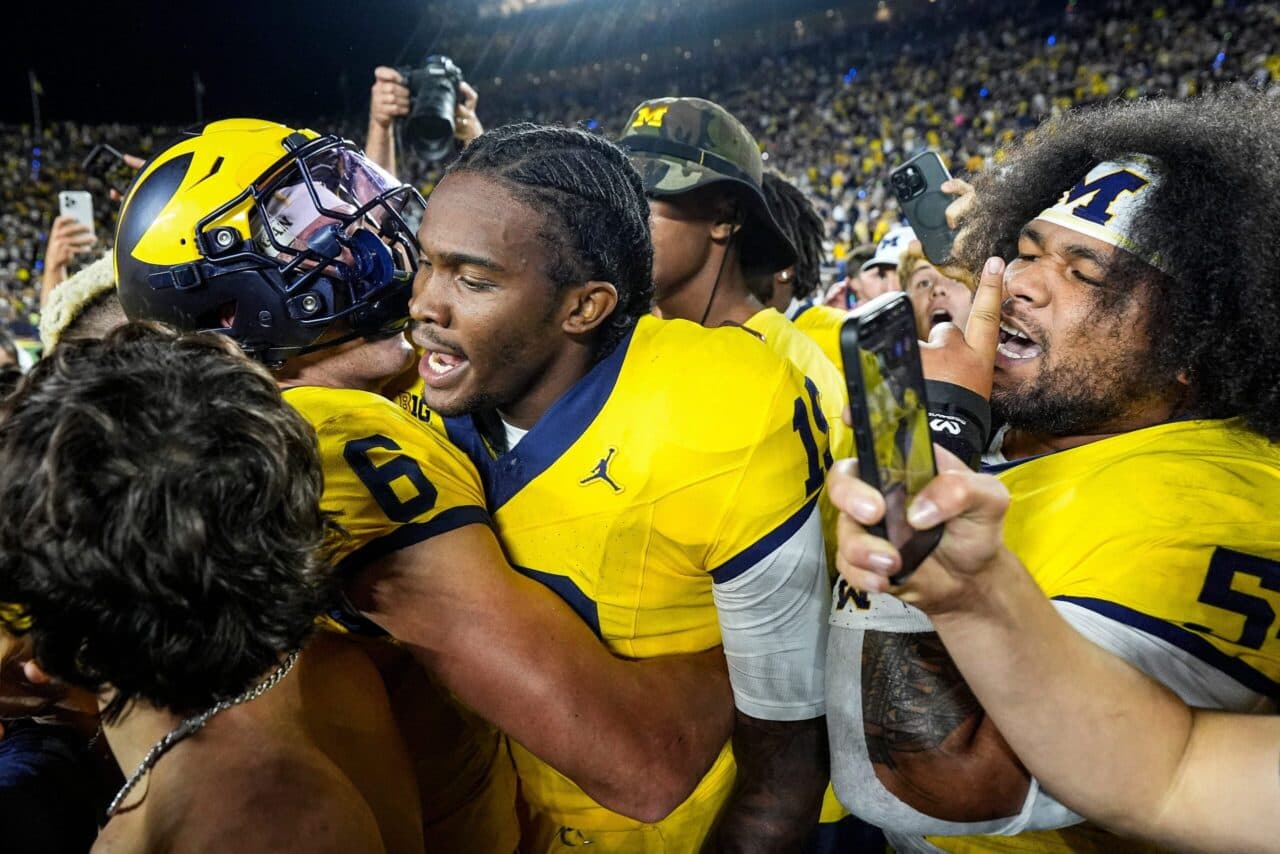
Week 1 of the 2026 college football season delivered chaos before most fans had finished their Labor Day cookouts. Michigan and Western Michigan traded haymakers into the final seconds, and the game ended on a Hail Mary that - depending on which sideline you stood on - was either a miracle or a mugging. The play instantly got branded the "Fail Mary," and by Sunday morning, every group chat in the state was arguing about the same thing: what do the NCAA Rules in Michigan Wolverines "Fail Mary" Week 1 vs. Western Michigan Broncos actually say?
Here's the setup, the controversy, and the rulebook language that will decide whether this goes down as a legendary finish or an officiating scar.
The Play Itself: How the "Fail Mary" Went Down
Western Michigan, heavy underdogs, had marched into the Big House and pushed Michigan to the brink. On an untimed down - awarded after a defensive penalty on the game's final snap - the Broncos' quarterback heaved a desperation ball into a crowded end zone. Bodies collided, arms tangled, and the ball came down in a scrum that officials initially ruled a catch. The Big House went silent.
Then replay review got involved, and everything got messier. Depending on which broadcast you watched, you saw either simultaneous possession, offensive pass interference that went uncalled, or a receiver who never fully controlled the ball through the ground.
The stakes made it worse. Michigan entered 2026 with Playoff expectations and a defense that was supposed to be the program's backbone. Western Michigan entered as a MAC spoiler with nothing to lose. That gap - blue-blood program, Group of Five underdog - turned a single reviewed catch into a referendum on replay, officiating, and whether the little guy ever gets the call.
📊 One untimed down decided a game with Playoff implications - the defensive penalty on the final snap gave Western Michigan exactly one shot, and the Broncos nearly cashed it.
By Sunday, the debate wasn't about the play anymore. It was about the rulebook.
The NCAA Rules Everyone Is Suddenly Googling
Untimed Downs and Penalty Extensions
The first rules question is the easiest to answer. Under NCAA rules, if a defensive penalty occurs on the final play of a half or game, the offended team gets one untimed down. That's not controversial - it's standard. The chaos started after the snap, not before it. Michigan fans screaming about "the game should have ended" are arguing with a rule that's been on the books for decades and gets applied in every conference, every Saturday.
Simultaneous Possession and the "Tie Goes To..." Myth
Here's where most fans get it wrong. In the NFL, simultaneous catch rules heavily favor the offense. Under NCAA rules, the language is similar but the replay standard matters more. If two players gain simultaneous possession, the ball is awarded to the passing team - but "simultaneous" is doing an enormous amount of work in that sentence. Replay officials have to determine whether both players actually had firm control at the same moment, or whether one player established possession first and the other simply had hands on the ball afterward.
That distinction is everything on a Hail Mary. In a pile of four or five bodies, "firm control at the same moment" is almost impossible to prove from a broadcast angle.
Completing the Catch Through the Ground
The third rules pillar is the one that decides most modern Hail Mary reviews: the receiver must maintain control of the ball after contact with the ground. If the ball moves, shifts, or touches the turf before the receiver completes the process of the catch, it's incomplete - no matter how heroic the dive looked in real time. In this case, the replay angles were maddeningly inconclusive, which is exactly why the ruling on the field carried so much weight.