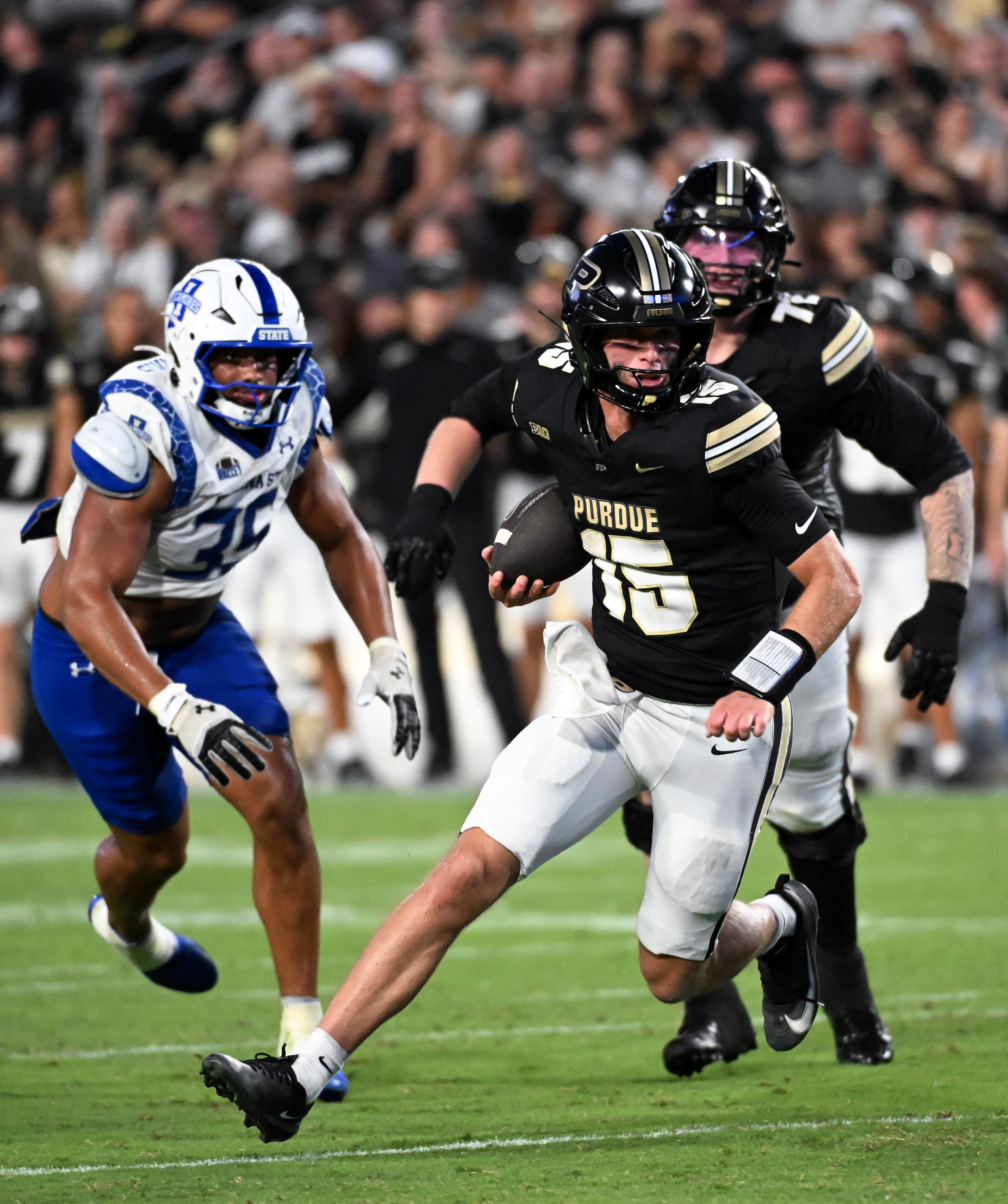
The Boilermakers' offense has a bruise it can't hide. Week after week, the interior run game has stalled. Now a physical Illinois front rolls into West Lafayette with every intention of making Purdue one-dimensional again. If the Boilermakers can't generate yards between the tackles on October 3, the entire play-action passing attack grinds to a halt. Here's the tape, the math, and the paths to a breakthrough. This Purdue Football: Illinois Preview - Can Purdue Find a Way to Run Inside? breaks down exactly where the game will be won.
The Interior Wall: Why Purdue's Run Game Is Stuck
Purdue's rushing numbers tell a brutal story. The Boilermakers rank near the bottom of the Big Ten in yards per carry, and the damage is concentrated exactly where Saturday's game will be decided: the A- and B-gaps. Inside zone and gap/power concepts have been stuffed at the line far too often, leaving the offense in second-and-long and third-and-long situations that neutralize the scheme's best features.
The root causes are familiar. A rebuilt offensive line has struggled to win one-on-one battles against athletic interior defenders, and combo blocks to the second level have been slow to develop. When the center and guards can't displace the nose tackle or climb cleanly to linebackers, the back has nowhere to go but sideways. That's not a recipe for moving the chains in the Big Ten.
📊 Purdue is averaging under 3.0 yards per carry on inside runs this season - a figure that ranks among the worst in the conference and puts constant pressure on the passing game.
The math is unforgiving. When a team can't churn out two or three yards between the tackles on first down, offensive coordinator play-calling shrinks, and defenses smell blood. Third downs become obvious passing situations, edge rushers pin their ears back, and the pocket collapses before routes can develop. That's the death spiral Purdue must avoid on October 3.
Scouting Illinois: The Battle in the Trenches
Illinois arrives with a defense built to punish exactly this weakness. The Illini defensive line plays with heavy hands and low pad level, and their linebackers flow downhill fast once they read run. Expect Illinois to load the box, walk a safety down, and dare Purdue to block them straight up.
Table: Illinois Defensive Front vs. Purdue Interior Offensive Line
| Category | Illinois Defense | Purdue Offensive Line | Edge |
|---|---|---|---|
| Run Stuff Rate (inside) | Top-4 in Big Ten | Bottom-5 in Big Ten | Illinois |
| Average Yards Before Contact | 1.1 yards allowed | 0.9 yards created | Illinois |
| Third Down Conversion Allowed | 32% | 28% converted | Illinois |
| Red Zone Rushing TD Allowed | 55% | 48% scored | Illinois |
The tape confirms what the numbers suggest. Illinois' tackles consistently win the first step, and their MIKE linebacker plays with the kind of instincts that erase hesitation. If Purdue's center can't reach the second level cleanly, the Illini will bleed the clock and keep the Boilermaker defense on the field. On the other side, Illinois' offense is built to grind, using heavy personnel and play-action off its own run game to keep defenses honest. For more on Illinois' 2026 trajectory, see coverage from ESPN Big Ten.
📊 Illinois ranks top-4 in the Big Ten in run stuff rate on inside concepts - meaning Purdue's biggest weakness meets the Illini's greatest defensive strength.
Where the Yards Have to Come From
The fix doesn't require a miracle, it requires leverage and patience. Three areas matter most: