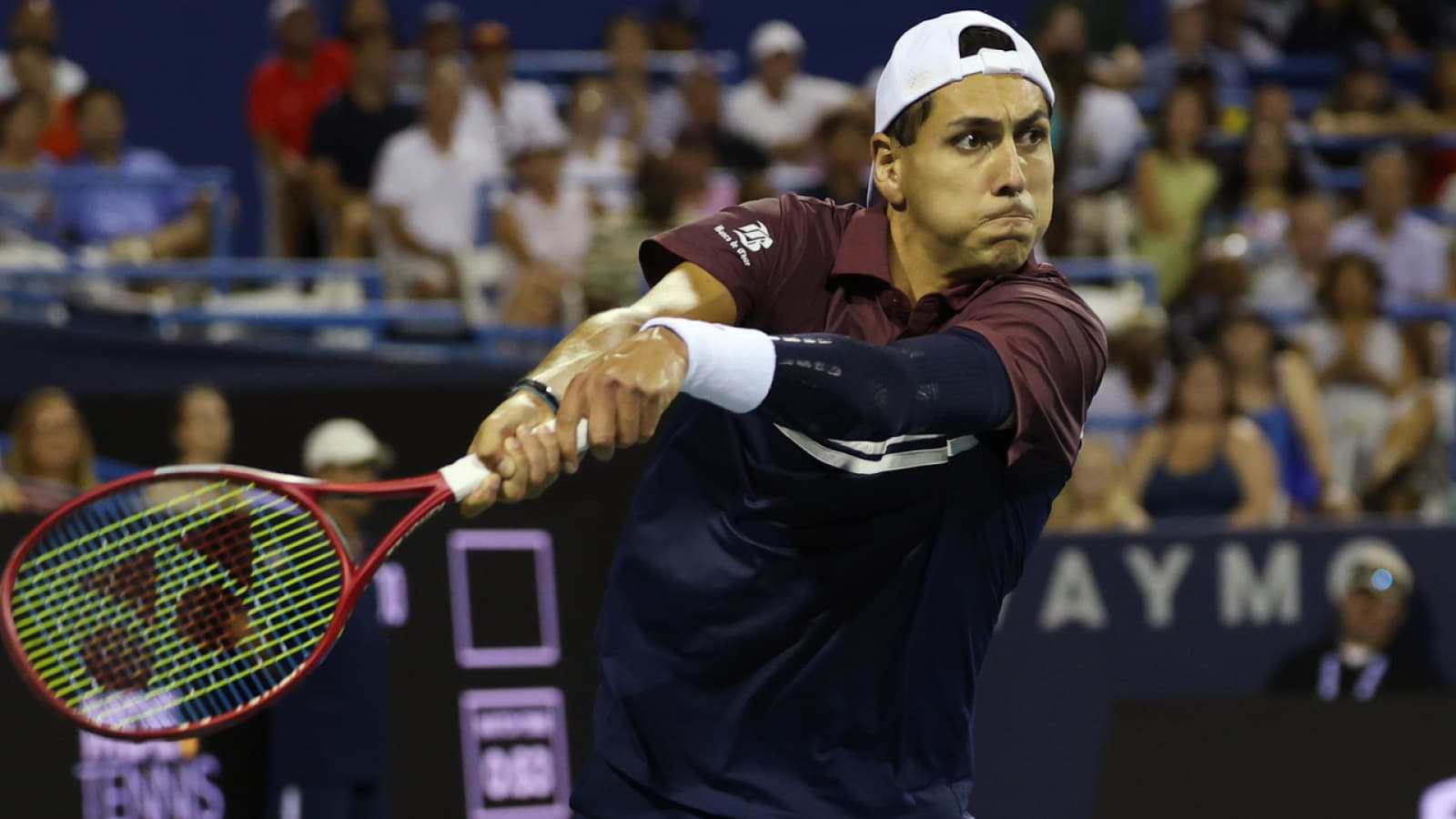
It began with a routine upset loss in the Eternal City. But it became the moment the tennis world could no longer look away. When Alejandro Tabilo fell to Alexander Zverev at the Italian Open in May 2026, the World No. 24 expected criticism from pundits. That's not what he got. Instead, his social media channels became a delivery system for something far more sinister: direct threats targeting not him, but his family. All tied to the gambling losses of strangers who bet on his failure.
Tabilo went public. The bettors were sending menacing messages straight to his loved ones. It blew the lid off a problem that had been festering beneath the surface of professional tennis for years. The ATP confirmed an investigation within hours on May 24, and the sport suddenly had a name for what was happening: betting-related abuse against players' families.
📊 78 verified betting-abuse incidents - Recorded across ATP Challenger and Tour events in the first half of 2026 alone, a 41% spike year-over-year.
The numbers that followed were damning. The ATP's June 30 transparency report revealed a 41% spike in verified betting-related abuse incidents compared to the same period in 2025, with 78 confirmed cases across the Tour and Challenger circuits. And according to the International Tennis Integrity Agency, family-directed abuse now accounts for a staggering 22% of all player welfare cases. That's a dramatic jump from just 14% the previous year.
| Metric | 2025 H1 | 2026 H1 | Change |
|---|---|---|---|
| Verified betting-abuse incidents | 55 | 78 | +41% |
| Family-directed abuse share | 14% | 22% | +57% |
| Player welfare cases overall | 210 | 245 | +17% |
The Digital Shield: ThreatAware 2.0 and a New Era of Protection
Tabilo's ordeal didn't just expose the problem. It triggered an unprecedented response from tennis governing bodies. On July 12, the ATP partnered with cybersecurity firm Signify Group to launch ThreatAware 2.0, an AI-driven social media filtering system capable of flagging betting-loss-driven abuse in 19 languages in real-time. Tabilo's case was explicitly cited as the catalyst.
The early results are cautiously optimistic. In his July 31 press conference at the Washington Open, Tabilo revealed his family had received "zero further direct threats" since the AI tool went live. But he was quick to caution that the battle is far from over: "The volume of abusive posts overall has not dropped, just redirected."
Indeed, the July 15 ITIA report showed that while the most egregious family-targeted threats were being caught, the broader ecosystem of toxic betting discourse remained troublingly resilient. And at a cost of $1.8 million USD annually (shared between the ATP and WTA), the financial weight of protection is significant. The WTA and ATP have now formalized their commitment through a joint Betting Integrity Abuse Protocol, effective August 1, which allows players to request anonymous threat handling and mandates psychological support within 48 hours of verified abuse.
📊 $1.8 million USD - Annual budget for ThreatAware 2.0, shared equally between ATP and WTA, per internal memos leaked to The Athletic on July 18.
The Ongoing Fight: What's Working, What's Not, and the Road Ahead
Despite the institutional response, Tabilo's experience highlights just how complex this battle truly is. Yes, the AI filter has successfully blocked direct family threats. But player surveys from July show only a 12% reduction in perceived safety improvement. That's a sobering gap between the technology's capability and players' lived experience of ongoing harassment.
The problem is structural. Betting abuse in tennis is not a bug; it's a feature of a system that encourages fans to wager on individual match outcomes, then offers no shield for the athletes at the center of those wagers. The ITIA reports that the average trigger for family-directed abuse is a losing bet on the player's own match. That means every tournament, every match, every point creates fresh opportunities for abuse.