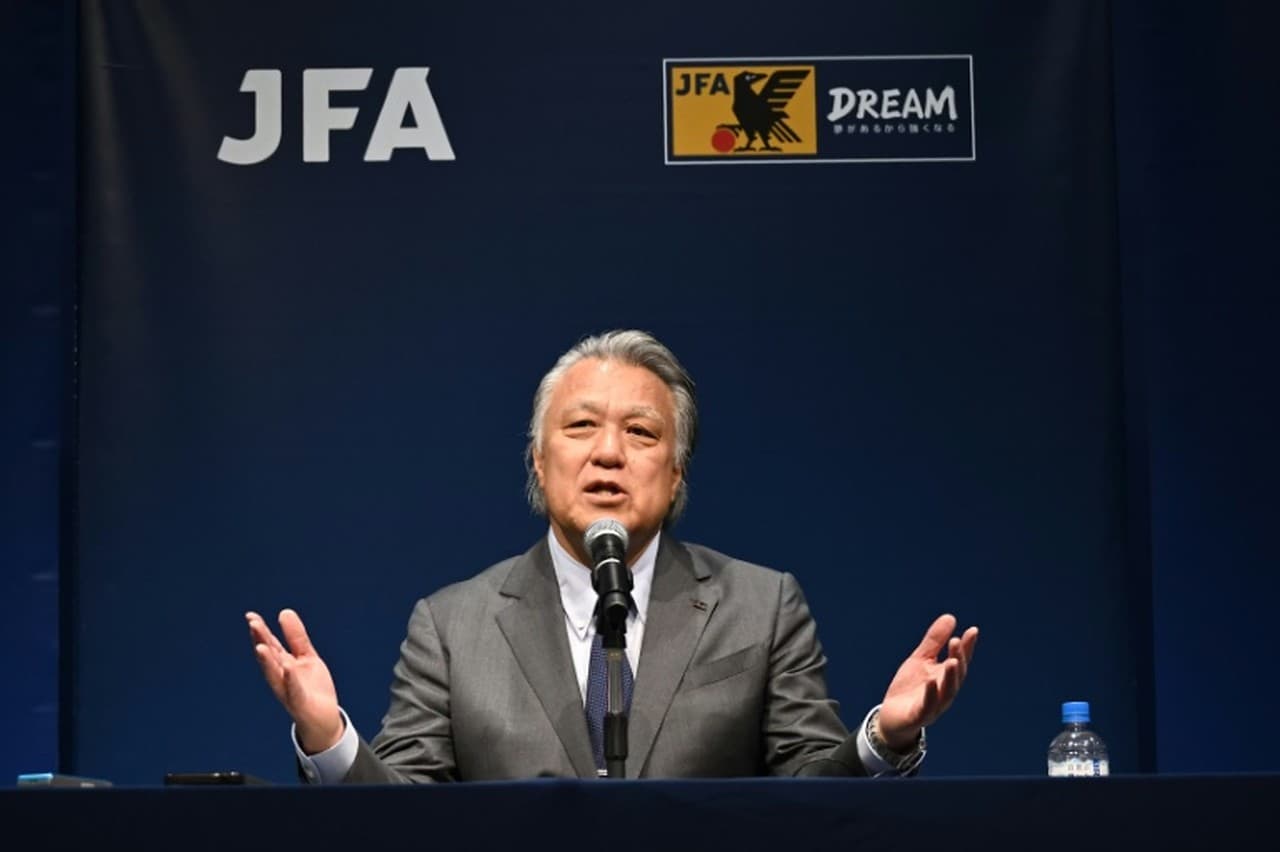
Football's talking. Kohzo Tashima's latest remarks on his FIFA election intentions have set the sport's chattering classes alight - and Get Sports Journals has the breakdown. The Japanese football chief, a familiar figure in Asian football governance, has reportedly indicated he has no plan "at this point" to step aside in the FIFA election race. That phrase - "at this point" - is doing an awful lot of heavy lifting. Here's why it matters.
Tashima says no plan "at this point" to step aside in the FIFA election race - and that single qualifier has tongues wagging from Tokyo to Zurich. In football politics, where every comma gets negotiated like a broadcast deal, "at this point" is less a statement of intent than a flashing neon sign reading: watch this space. Fans, take note. The race for FIFA's top job just found its most intriguing subplot.
What Tashima Actually Said - And Why the Wording Matters
Start with the art of the non-denial. In football governance, officials almost never say "never" - it's the one word that comes back to bite you at the next Congress. So when a figure of Tashima's stature frames his position as unchanged "at this point," insiders hear deliberate, diplomatic hedging. The door isn't closed. It's just politely ajar.
Context matters. Tashima's name has circulated in Asian football circles for years as a potential standard-bearer for the region - he wasn't plucked from nowhere. The record backs it up. Back in early 2015, Tashima was openly discussed as a possible Asian candidate ahead of the FIFA presidential election Sepp Blatter won that May. The episode proved he commands real consideration when the continent weighs its options.
Fast-forward to today, and the same measured language is back. Analysts note that a statement like this gives Tashima maximum flexibility: it keeps him in the conversation, satisfies domestic stakeholders who want stability, and spares him the awkwardness of a formal withdrawal he'd have to publicly walk back later.
> 📊 "At this point" - a classic political hedge that keeps a candidacy alive without committing to it, the kind of phrasing that has preceded more than one late entry into football's biggest race.
The bottom line? Don't mistake a lack of announcement for a lack of ambition.
The Candidates, the Congress, and the Calendar
Here's where one quote connects to the wider contest. FIFA presidential elections run on a predictable rhythm - held in years ending in odd numbers, with the most recent vote in 2023 and the next expected at the FIFA Congress in 2027. That calendar shapes everything: candidates get a window to declare, build blocs, and court confederations before the ballots are counted.
Gianni Infantino has held the FIFA presidency since February 26, 2016, and was re-elected in 2019 and 2023. Any challenger - Tashima included - would be testing the waters against an incumbent with deep institutional footing. That reality explains the cautious choreography in every camp.
| Element | Status |
|---|---|
| Current FIFA President | Gianni Infantino (since Feb 26, 2016) |
| Re-election years | 2019, 2023 |
| Next expected presidential election | 2027 FIFA Congress |
| Tashima's stated position | No plan "at this point" to step aside |
| Historical precedent | Discussed as possible Asian candidate ahead of May 2015 election |
The takeaway for fans: this race is a marathon, not a sprint - and the starting gun hasn't officially fired.
Why It Matters for Japan and Asian Football
Tashima's position isn't just a personal decision. It carries weight for the Japan Football Association and the broader Asian football bloc. Asia has long pushed for a stronger voice at FIFA's top table, and a credible candidacy from the region would signal that the continent intends to shape the agenda, not just react to it.
There's a strategic calculus at play. A formal Tashima run would energize Asian federations looking for a rallying figure and could reshape voting blocs well beyond the region. A quiet Tashima exit, by contrast, would leave Asia searching for its next standard-bearer - and rival confederations would move quickly to fill that vacuum.