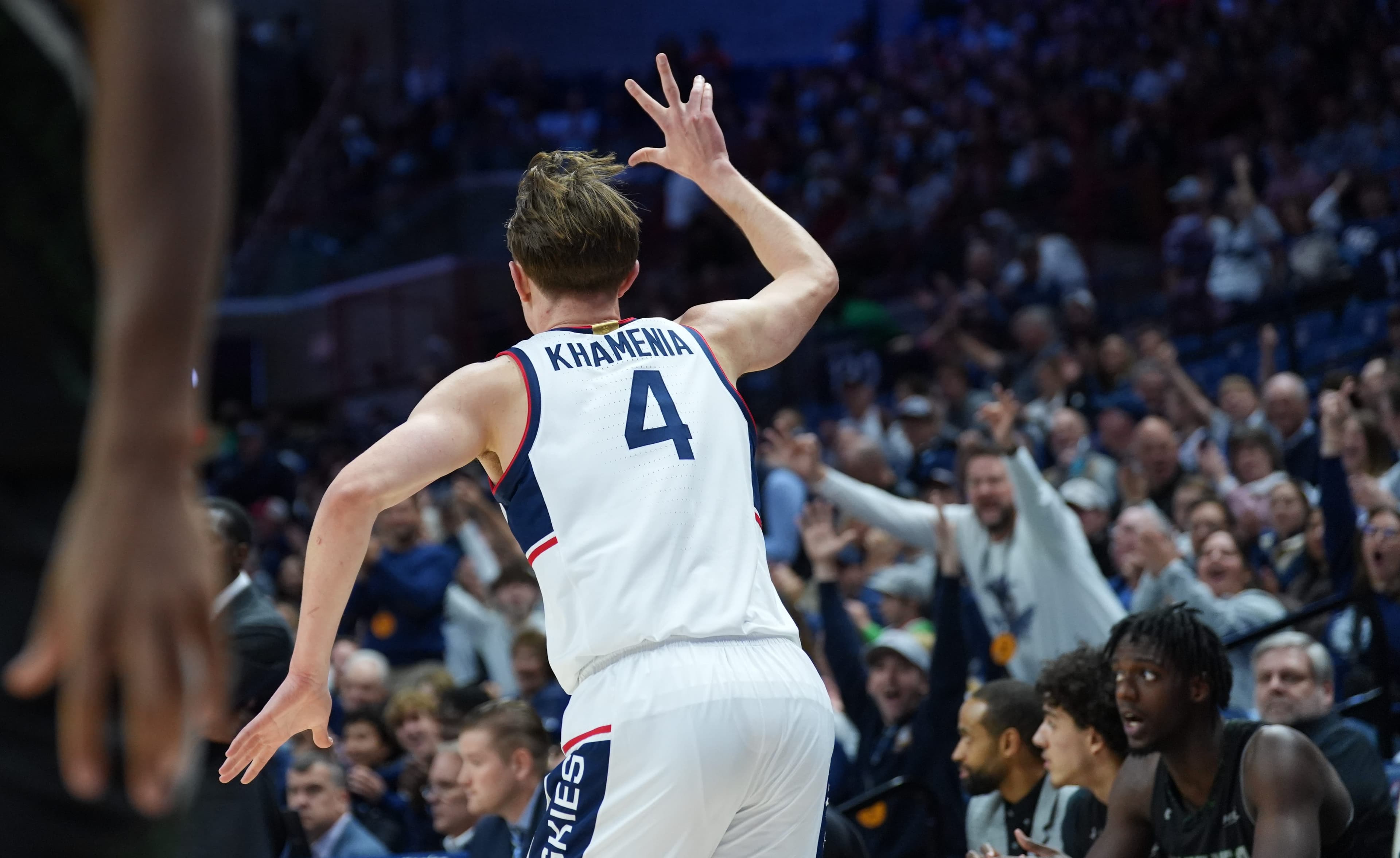
STORRS, CT - The UConn men's basketball program has taken an early-season gut punch. Huskies forward Nik Khamenia will miss the next six to eight weeks with a foot injury, the team announced Thursday - a timeline that stretches deep into the heart of the schedule and puts real pressure on UConn's frontcourt rotation. The news landed like a thunderclap for a fanbase still dreaming big about this season. The immediate question: how do the Huskies absorb the loss of a key forward and keep their national ambitions intact?
The program will re-evaluate the injury as the calendar moves along, with the six-to-eight-week window landing somewhere between late December and mid-January. That means Khamenia is very likely to miss the remainder of UConn's non-conference gauntlet and the opening stretch of Big East play - a rough patch where every early statement win matters for March seeding. According to the official release, the injury occurred during a team session, though the program offered no further detail on the specific play or mechanism. That's standard operating procedure in Storrs, and it leaves fans watching the injury report like it's a box score.
> 📊 6 - 8 weeks - The projected absence for Khamenia, a timeline that spans most of the non-conference slate and the opening weeks of Big East play.
Here comes the caveat every UConn fan knows in their bones: foot injuries are brutally unpredictable. A stress reaction can turn into a fracture. A sprain can linger into a lost six-week chunk. And big men often take longer to ramp back up than guards. Anyone penciling Khamenia into a starting five by early January should do so with a healthy dose of anxiety.
What It Means for UConn's Rotation and Frontcourt Depth
Who Steps Up
Now the real work begins for Dan Hurley and his staff. Losing a forward of Khamenia's caliber doesn't just remove a name from the box score - it reshapes how UConn defends, rebounds, and spaces the floor. The obvious first move is the next man up, whether that's a veteran wing sliding up a position or a sophomore forward finally getting the extended run he's been waiting for. UConn built its roster on the assumption that versatility can mask a hole. That theory is about to get its toughest stress test of the season.
The defensive and rebounding impact is where the Huskies could feel the pinch most. Khamenia's length at the four gave UConn a switching option on the perimeter and a body on the glass in big-boy games. Without him, expect more help-side rotations, more guards crashing down for rebounds, and opponents hunting mismatches in the paint.
Scheme Adjustments to Watch
Offensively, look for UConn to tilt more toward its guards and its veteran post presence - more ball screens up top, more drive-and-kick action, and likely a smaller lineup that trades size for quickness. That's a fun idea in November and a dangerous one in a February rock fight. Pace and press considerations also come into play: if the coaching staff wants to keep the throttle down, it needs bodies, and the bench just got thinner.
| Area | Expected Adjustment | Risk Level |
|---|---|---|
| Rebounding | Guards crash glass more; post by committee | High |
| Perimeter switching | Reduced flexibility at the four | Medium-High |
| Offensive spacing | More guard-heavy actions, fewer post touches | Medium |
| Minutes management | Fatigue, foul trouble over 6 - 8 weeks | High |
> 📊 Depth test - UConn must fill a starting-caliber forward's minutes over a two-month stretch, turning the bench into a nightly pressure test.
The Bigger Picture: Season Outlook and Return Ramp-Up
Zoom out, and this is a schedule problem as much as a roster problem. The six-to-eight-week window swallows a chunk of UConn's marquee non-conference tests and the first month of Big East play - the exact stretch where the NCAA selection committee sits up and takes notice. Every game Khamenia misses is a data point on UConn's seeding resume, and the Huskies can't afford a February hangover if January got rocky.