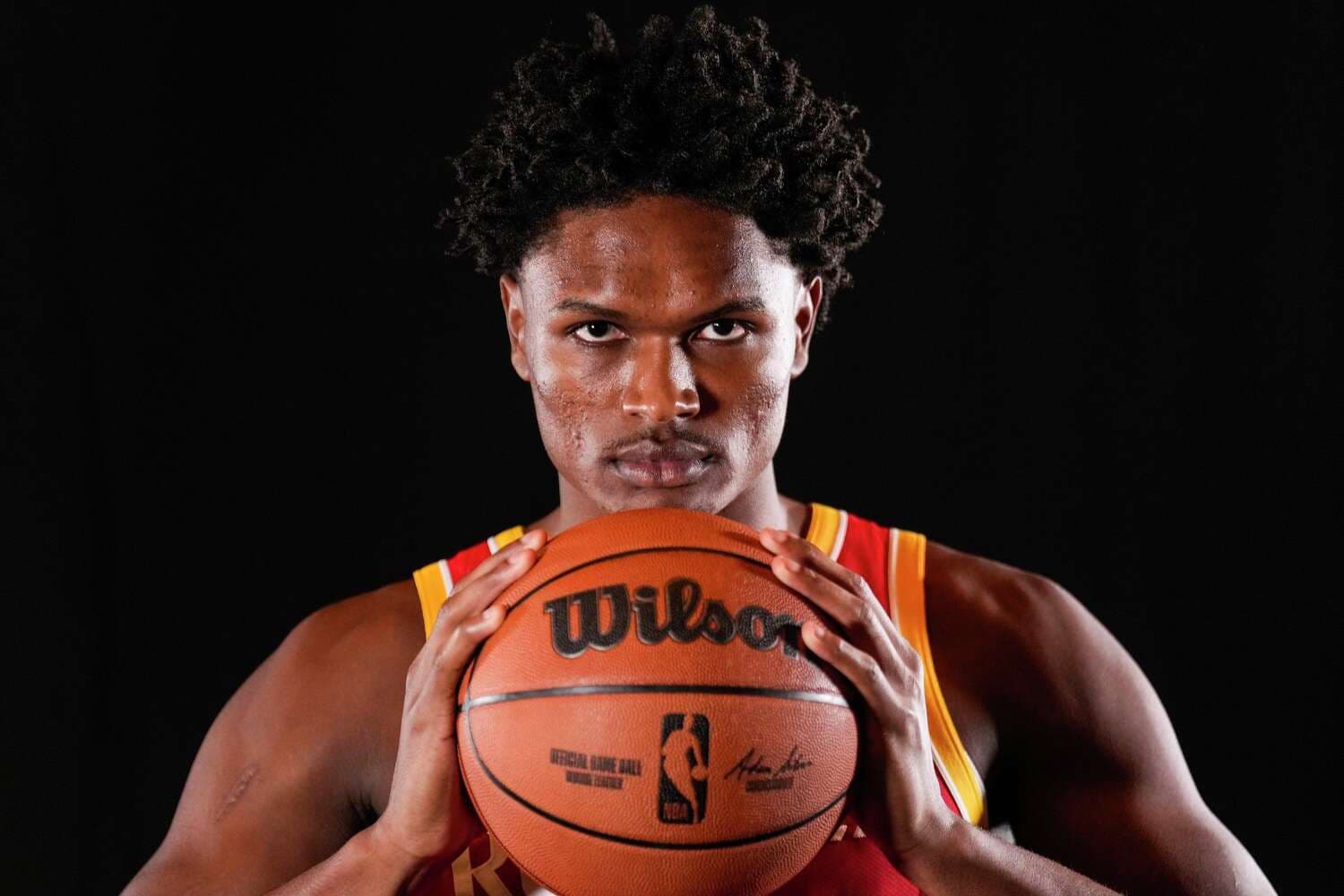
The Houston Rockets didn't hand Amen Thompson a contract extension because of his jump shot. They handed it to him because of what he does to the other team's best player every single night.
Let's not dance around it: the headline framing isn't new. For months, the entire basketball world has been asking whether Amen Thompson earned his contract extension with the Rockets on defense. Can he make the shooting leap? That exact question has been the dividing line between Rockets optimists and skeptics. And with the extension now on the books, Houston has officially picked a side.
Here's the thing - the defense was never the question.
The Extension Was a Defense-First Bet
Watch even a handful of Rockets games over the past two seasons and you already know the answer to the easy part of this debate. Thompson's calling card isn't scoring. It's the way he suffocates opposing ball-handlers.
At 6-foot-7 with elite lateral quickness and recovery speed that borders on unfair, Thompson gives head coach Ime Udoka the flexibility to switch 1-through-4 without blinking. He's the engine of Houston's defensive identity - the guy who takes the toughest assignment so everyone else can slide into more comfortable roles.
| Skill | Impact | Why It Matters |
|---|---|---|
| Point-of-attack lockdown | Shuts down opposing lead guards | Anchors Udoka's defensive system |
| Switchability (1-4) | Eliminates mismatch hunting | Rare versatility in today's NBA |
| Transition chaos | Deflections into easy buckets | Value that never shows in shooting splits |
| Positional versatility | Guards multiple positions nightly | Few players in the league can do this |
📊 Amen Thompson's defensive versatility lets Houston switch 1-through-4 without hesitation - a capability that fewer than a dozen players league-wide possess at his level.
The market has spoken, too. Recent extension cycles have rewarded two-way wings and defensive aces handsomely - look at what comparable players have commanded over at Spotrac's contract tracker. Houston moved early rather than betting against its own evaluation, and honestly? That's how smart front offices operate.
The bet is simple: defense is a floor, not a ceiling. The question is whether the offense catches up before the contract looks rich.
The Shooting Leap: What It Actually Requires
This is the whole article. "Can he make the leap?" needs to be answered with specifics - not vibes.
Thompson's rookie profile was always clear: elite athleticism and defensive instincts, limited perimeter jumper. That hasn't changed overnight. So what does real shooting improvement actually look like?
The three numbers that matter:
- Three-point attempts per game - Is he willing to shoot? A defensive ace who passes up open threes caps his own ceiling. Volume precedes efficiency.
- Free-throw percentage - The most predictive leading indicator of sustainable shooting improvement. If the FT line is trending up, the jumper usually follows.
- Catch-and-shoot vs. pull-up splits - Houston needs him to punish defenses that sag off him. Spot-up competence is the realistic Year 1 target; off-the-dribble creation is the dream.
📊 Free-throw percentage is historically the best predictor of future three-point improvement - tracking this one stat tells you more about Thompson's trajectory than any single game's shooting line.
Beyond the make rate, watch the mechanics. A cleaner, more repeatable lower body - a stable base, consistent release point - is the tell that a shooting jump is sustainable rather than a hot streak.
And yes, there's a cautionary tale here. Elite defenders who never develop a jumper get schemed off the floor in playoff series. That's the risk Houston just priced in. But there's also the optimistic template: wings who arrived as defenders and added a jumper became franchise cornerstones. That path took years, not months.