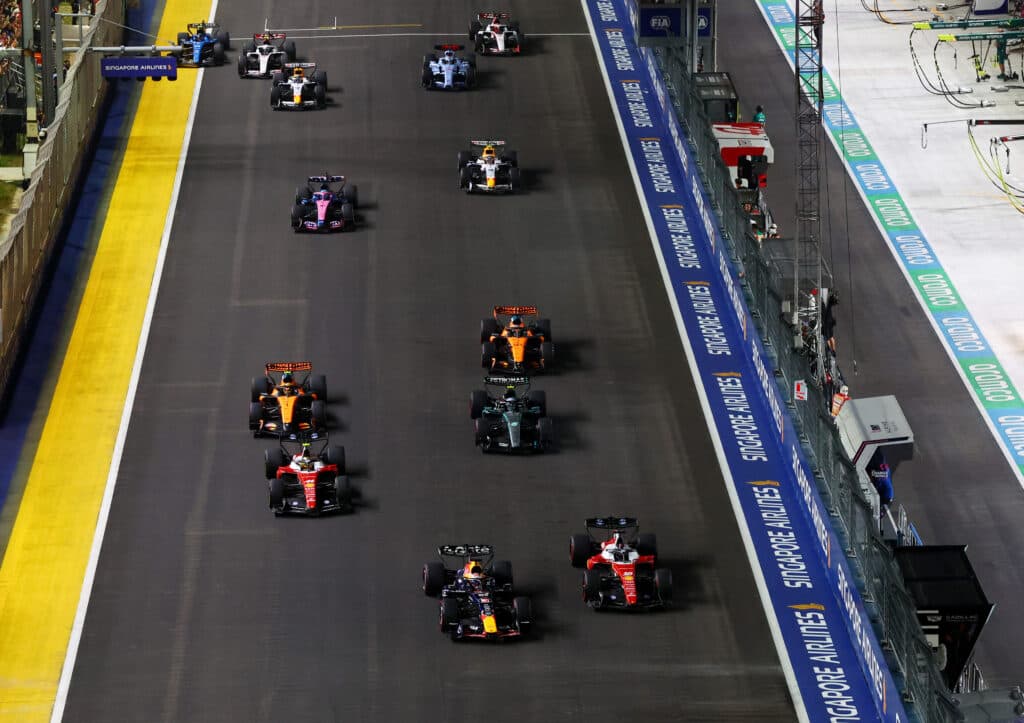
Lando Norris has never been the type to hide behind the corporate script. So when McLaren's 2026 campaign began slipping through its fingers, the British star didn't point at the wind tunnel, the pit wall, or the weather. He pointed the finger inward - and he did it out loud. In a season where new-era regulations have scrambled the pecking order and McLaren's grip on front-running pace has visibly loosened, Norris has now admitted that the grind of chasing a title in a car that keeps stepping backward is, in his own words, "mentally draining." That single admission landed like a thunderclap across the paddock. It's easy to see why.
The Headline That Stopped the Paddock Cold
Why This Story Hits Different at This Stage of 2026
October is no time for honesty in Formula 1 - at least not this kind. There are races to run, championship math to protect, engineers to shield from the spotlight. And yet here comes Norris, one of the grid's most popular and most scrutinized figures, describing McLaren's slide as something heavier than a setup problem. This is the driver fans voted onto podiums all year, the same guy whose radio messages once carried genuine swagger. Hearing that voice describe McLaren's form as mentally draining reframes the story of the second half of 2026 entirely. It signals a team feeling the psychological cost of losing ground while the entire paddock - and an entire fanbase - watches it happen in real time.
📊 McLaren's mid-season points rate trailed its early-2026 pace by a wide margin - the drop-off in race-day scoring is what makes Norris's "mentally draining" admission land so hard so late in the year.
Inside Norris's "Mentally Draining" Verdict on McLaren's Slide
Where the Team's Pace Went Missing
Strip away the emotion and there's a mechanical story underneath. Across the second half of the 2026 calendar, McLaren's one-lap speed has been erratic. Its race pace - once the platform's calling card - has been swallowed by relentless development from the grid's new-look front-runners. Under this regulation cycle, where power unit efficiency and energy management dominate, tiny aerodynamic swings translate into brutal gaps on Sunday. Norris has repeatedly dragged good results out of imperfect machinery. But dragging requires fuel, and the tank is being pushed to empty. When your team expects to win and instead scrapes for points, every single lap becomes an argument with the clock.
Table: Where McLaren's Challenges Have Surfaced in 2026
| Area | Early-season form | Recent form | Net effect |
|---|---|---|---|
| One-lap qualifying pace | Front-row threat | Frequent Q2 fights | Grid position swings |
| Race-day tyre management | Strong, repeatable | Inconsistent stints | Losing position at pit windows |
| Development trajectory | Leading the upgrade race | Chasing rivals' gains | Points gap widening |
The Weight of Losing While the Whole Grid Watches
Everyone loses in F1. But there's a specific, corrosive pressure that comes with losing while you're expected to win. McLaren arrived in 2026 carrying momentum and expectation. Every unforced error, every botched strategy call, every engine-power deficit gets magnified. Norris, an honest and self-critical competitor, has shouldered that weight publicly rather than in private. Calling the slump mentally draining isn't a complaint - it's a diagnosis. And diagnoses are only useful if you actually plan to treat the patient.