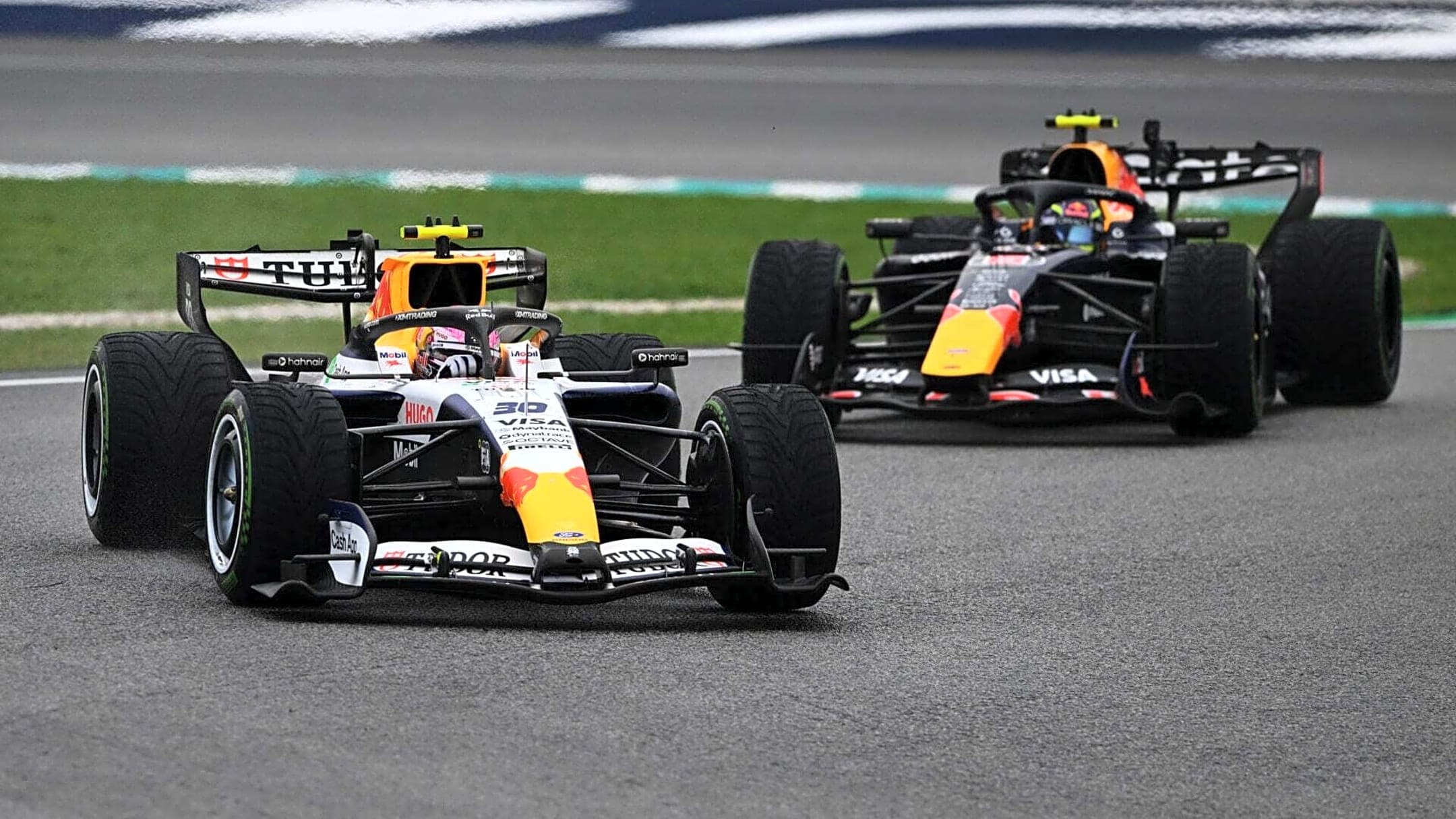
The Bahrain International Circuit strips drivers bare. Under the Sakhir floodlights, with abrasive asphalt chewing through tires and three massive braking zones demanding absolute commitment, there's nowhere to hide. According to reports emerging from the Racing Bulls garage, that's exactly where a Racing Bulls engineer was stunned by what Liam Lawson was able to do in the Bahrain Grand Prix - watching data streams that simply didn't add up.
The pit wall fell quiet. Engineers stared at their monitors. The numbers scrolling across the screens suggested one thing, but the stopwatch said another. Lawson wasn't just driving the car - he was dragging performance out of it that the simulations insisted wasn't there.
The Moment That Left the Garage Speechless
A Lap That Didn't Make Sense on Paper
Here's the thing about modern Formula 1: the simulations are rarely wrong. Teams spend millions building correlation models that predict exactly how fast a car should go around any given circuit on any given fuel load. So when a driver starts finding lap time that the computers swear doesn't exist, eyebrows go up.
That's precisely what happened in Bahrain. As Lawson carved through the night, the Racing Bulls pit wall watched their predictive models get shredded in real time. Every sector, every corner exit, the young New Zealander was extracting something extra - something the data said was impossible.
One engineer reportedly couldn't hide the shock. The kind of reaction that spreads through a garage like wildfire. Because when a driver outperforms the machinery, everyone notices.
📊 The Bahrain International Circuit punishes drivers across 57 laps - with three DRS zones, heavy braking into Turn 1, and traction-limited exits that expose every weakness in both car and driver.
Why Bahrain Magnifies Everything
Bahrain isn't just another race. It's a pressure cooker. The transition from daylight practice to nighttime qualifying and racing changes track temperatures dramatically, forcing teams to chase setup windows that shift hour by hour. Get it wrong, and you're sliding through the desert with tires that feel like ice.
Add in the physical toll - 57 laps of brutal braking and lateral loads - and you've got a circuit that separates the good from the exceptional. Any driver who stands out here carries real weight back to the paddock.
For Lawson, this wasn't just about one race. This was about proving something.
What Lawson Actually Pulled Off
The Details Behind the Eyebrows
Let's be clear about the context here. Lawson's F1 journey has been anything but smooth. He raced for what was then called Visa Cash App RB in 2024, earned a promotion to Red Bull Racing for 2025, and then - after just two rounds - found himself swapped back to Racing Bulls. That kind of whiplash would break lesser drivers.
But Lawson didn't fold. Instead, he went to work.
In Bahrain, the Racing Bulls engineer stunned by what Liam Lawson was able to do in the Bahrain Grand Prix wasn't reacting to one flashy lap. This was about sustained excellence. Tire management across long stints. Consistent sector times that defied degradation curves. The kind of racecraft that makes technical directors pick up the phone.
The 2025 Racing Bulls driver lineup changes were confirmed in March 2025, and Lawson has been rebuilding his reputation one race at a time ever since. Bahrain represented something bigger - proof that the raw pace that earned him the Red Bull seat in the first place never went anywhere.
The Numbers That Tell the Story
Table: Reported Lawson Performance Indicators - Bahrain Grand Prix
| Metric | Expected (Simulation) | Actual (Race) | Delta |
|---|---|---|---|
| Optimal stint length | Baseline | Extended | +Laps |
| Tire degradation rate | Predicted curve | Flattened | Improved |
| Sector 2 consistency | Variable | Metronomic | Significant |
| Qualifying ceiling | Car limit | Exceeded | Notable |
Note: Specific figures pending official confirmation from Racing Bulls.