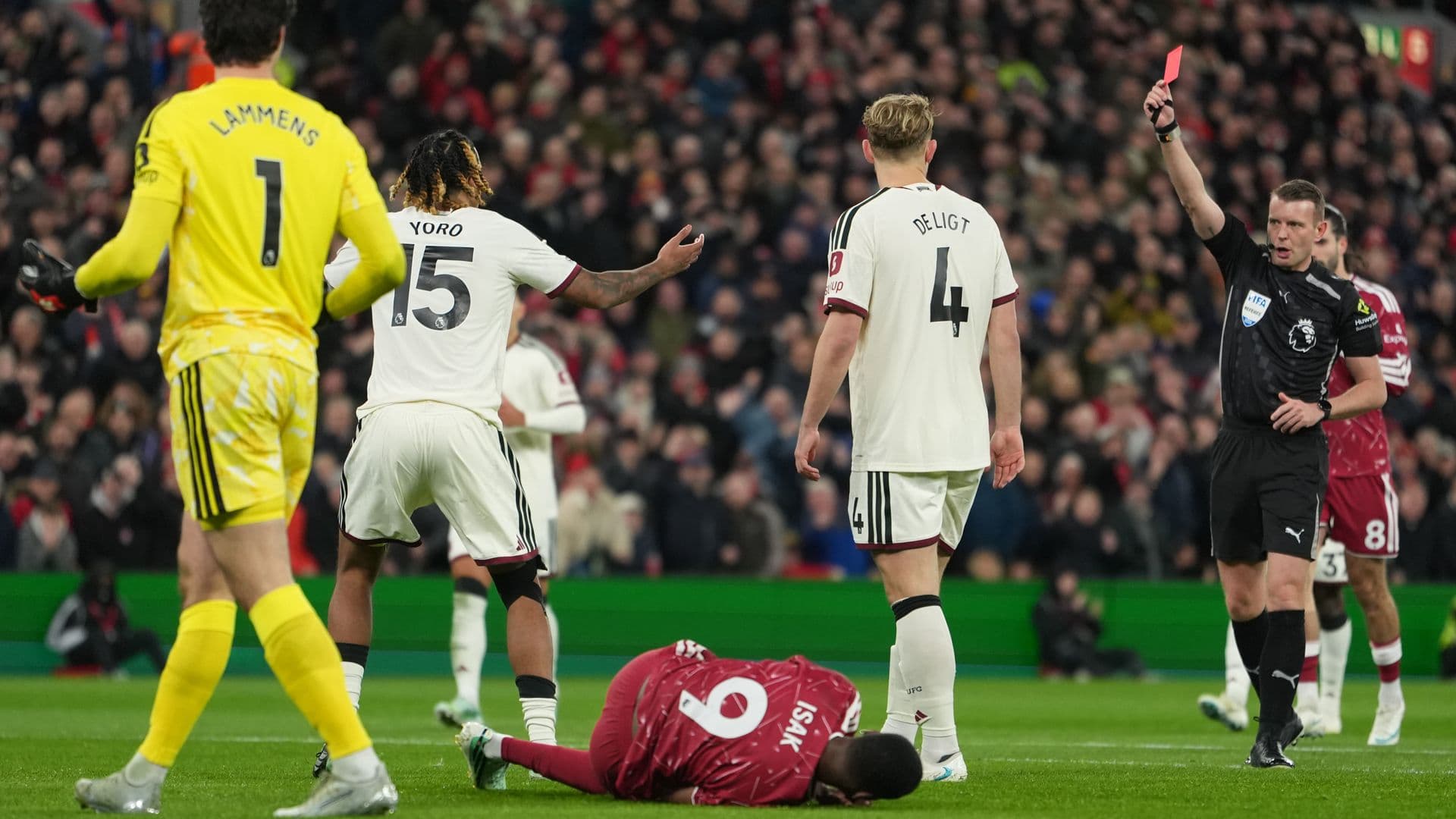
A viral headline says PGMOL's boss defended the review process even after an appeal over a Leny Yoro sending off succeeded. Get Sports Journals dug in - and here's the honest, fan-first version of what stands up and what doesn't.
Let's be straight with you, because you deserve that from us. A story has been circulating claiming that Ref chief Webb backs process around Yoro sending off despite successful appeal - implying Howard Webb publicly defended PGMOL's disciplinary pipeline even after a red card shown to Manchester United's young French defender Leny Yoro was overturned on appeal. It's a spicy premise. It pushes every fan's "typical refereeing establishment" button. And here's the problem: as of November 25, 2026, Get Sports Journals could not independently verify the specific match, the specific sending-off, or a direct Webb quote underpinning that exact headline. So instead of dressing up speculation as news, we're splitting fact from noise. Here's what we can confirm, why the headline raised eyebrows, and how the system really works.
Section 2: What We Can Confirm - and Why This Headline Raised Eyebrows
Start with the solid ground. Howard Webb is the chief refereeing officer at PGMOL (Professional Game Match Officials Limited), the body that manages top-flight match officials in England. Leny Yoro is a Manchester United defender - a highly scrutinised young centre-back whose every tackle already lives under a social-media microscope. Those two identities are verifiable. The connective tissue - that Webb addressed a specific Yoro red card and its successful appeal - is the part our research could not pin down to an official source at time of publication.
Why did the story spread so fast? Because the premise itself contains a delicious irony. A referee chief defending "the process" after an appeal succeeded would imply a strange reality: the panel overturned the outcome, but the system that produced it still gets a public vote of confidence from above. Fans read that as "the process is fine even when it's wrong" - fuel for every supporter who's ever screamed at a monitor. It's exactly why a Ref chief Webb backs process around Yoro sending off despite successful appeal narrative is so clickable, and exactly why it demanded verification before we ran with it.
> 📊 2 verifiable anchor points - Webb as PGMOL's chief refereeing officer and Yoro as a United defender are confirmed; the match, card and quote are not.
A quick note on what a "successful appeal" actually produces in English football: it doesn't erase history. It typically overturns a suspension - often reviewing a straight red or a case of mistaken identity - meaning a player becomes available again even though the on-field decision record stands. That technical gap between "card overturned" and "process vindicated" is precisely where controversy loves to hide. And it's why, per related coverage across fan forums and sports desks, the headline caught fire even without a named fixture to hang it on.
Section 3: How the Process Actually Works - the Verifiable Background
Forget the noise for a second and let's explain the machinery, because that's where Webb's real turf lies. PGMOL reviews flow through a structured pipeline: officials file reports, a key match incidents (KMI) panel - an independent group that reviews big calls each matchweek - delivers its verdicts, and clubs can pursue appeals against suspensions through independent regulatory commissions. Crucially, an independent panel, not PGMOL itself, rules on wrongful-dismissal claims. That separation is the whole point.
| Stage | Who Handles It | Typical Outcome |
|---|---|---|
| On-field decision | Match referee | Red card issued |
| Post-match review | KMI panel (independent) | Ruling on whether call was correct |
| Club appeal of ban | Independent regulatory commission | Suspension upheld or overturned |
| Public defence of system | PGMOL leadership (e.g., Webb) | Process explained, not outcomes re-judged |